
History
Discover the the Rancho Bernardo Inn, which has hosted the likes of Bing Crosby, Bob Hope, and Jimmy Connors.
A member of Historic Hotels of America since 2021, the Rancho Bernardo Inn is among the most luxurious destinations in all of southern California. Now a celebrated historic hotel in San Diego, the inn has provided world-class service for more than half a century, though its roots reach much further back. The land upon which the Rancho Bernardo Inn resides once belonged to one of the many Spanish missions that proliferated throughout California centuries ago. (Explorers passing through the area often referred to the location as the “El Paraje O Cañada de San Bernardo.”) But when Mexican patriots achieved their independence in 1821, local authorities confiscated the land for use as farmland. The newly created Mexican government subsequently subdivided the region into huge estates, the largest of which extended for more than 17,000 acres. Calling the area the “Rancho San Bernardo,” the Mexican officials eventually granted the land to an English sea captain named Joseph Snook. Snook only resided on the estate for just a decade, though, passing away childless shortly after the end of the Mexican-American War. His brother, John, inherited the Rancho San Bernardo at the start of the 1850s, but he, too, died. John Snook’s children sold their father’s possessions to Thomas Fox in 1867, who was operating as an agent for entrepreneur James McCoy. McCoy then began to parcel out portions of the sprawling estate into small plots of land, which he used to create an agricultural village that would serve the area’s many farmers.
The largest undivided piece of the Rancho San Bernardo—about 5,800 acres—remained privately owned well into the 20th century. But the area eventually passed into the ownership of the San Diego Water Company during the 1920s. The corporation, in turn, deeded the area to George Daley, a prosperous landowner who had already managed two gigantic ranches in the neighboring communities of Escondido and Jamul. Daley and his family called the place home for the next few years, until George’s passing in 1957. His two nephews, Donald and Lawrence, subsequently assumed control over the ranch. They soon made a deal with Harry Summers and W.R. “Fritz” Hawn to transform the entire region into a spectacular planned community called “Rancho Bernardo.” Blueprints for the settlement featured many fabulous residences, as well as several luxury businesses, the most notable of which was a boutique hotel at the center of town. After two years of constriction, the brilliant hotel opened its doors for the first time in 1963. Named the “Rancho Bernardo Inn,” it debuted with just 30 rooms valued at a base rate of $8 per night. The amenities inside the hotel were also incredibly luxurious, featuring such perks like color televisions and an exquisite “all-you-can-eat” fish fry. It even offered a championship-caliber, 18-hole golf course designed by the renowned landscape architect William Bell.
The Rancho Bernardo Inn achieved fame throughout the country seemingly overnight due to its grand elegance and fantastic hospitality. Many illustrious guests soon visited the inn, including the likes of comedian Bob Hope and superstar Bing Crosby. The facility also began hosting many sporting events sponsored by the Professional Golf Association (PGA), starting with the San Diego Open in 1964. The LPGA would even host the Honda Civic Classic at the inn from 1978 to 1980, as well. In order to meet the surging popularity, the Daleys and their business partners expanded the inn to feature 151 guestrooms and constructed the renowned restaurant, El Bizcocho. Chefs such as Gavin Kaysen and Patrick Ponsaty honed their skills in its kitchen, giving the eatery much repute across the state. (El Bizcocho had since been replaced by the equally stunning AVANT.) In 1975, James Colachis of JC Resorts acquired the Rancho Bernardo Inn. His apt stewardship managed to further elevate the national grandeur of the destination, earning it its first AAA Four Diamond title just two years later. The Rancho Bernardo Inn has maintained its status as a AAA Four Diamond retreat every year since. Today, the Rancho Bernardo Inn continues to be consistently ranked as one of the most outstanding vacation hotspots in the entire United States.
Hotel Timeline
The Location
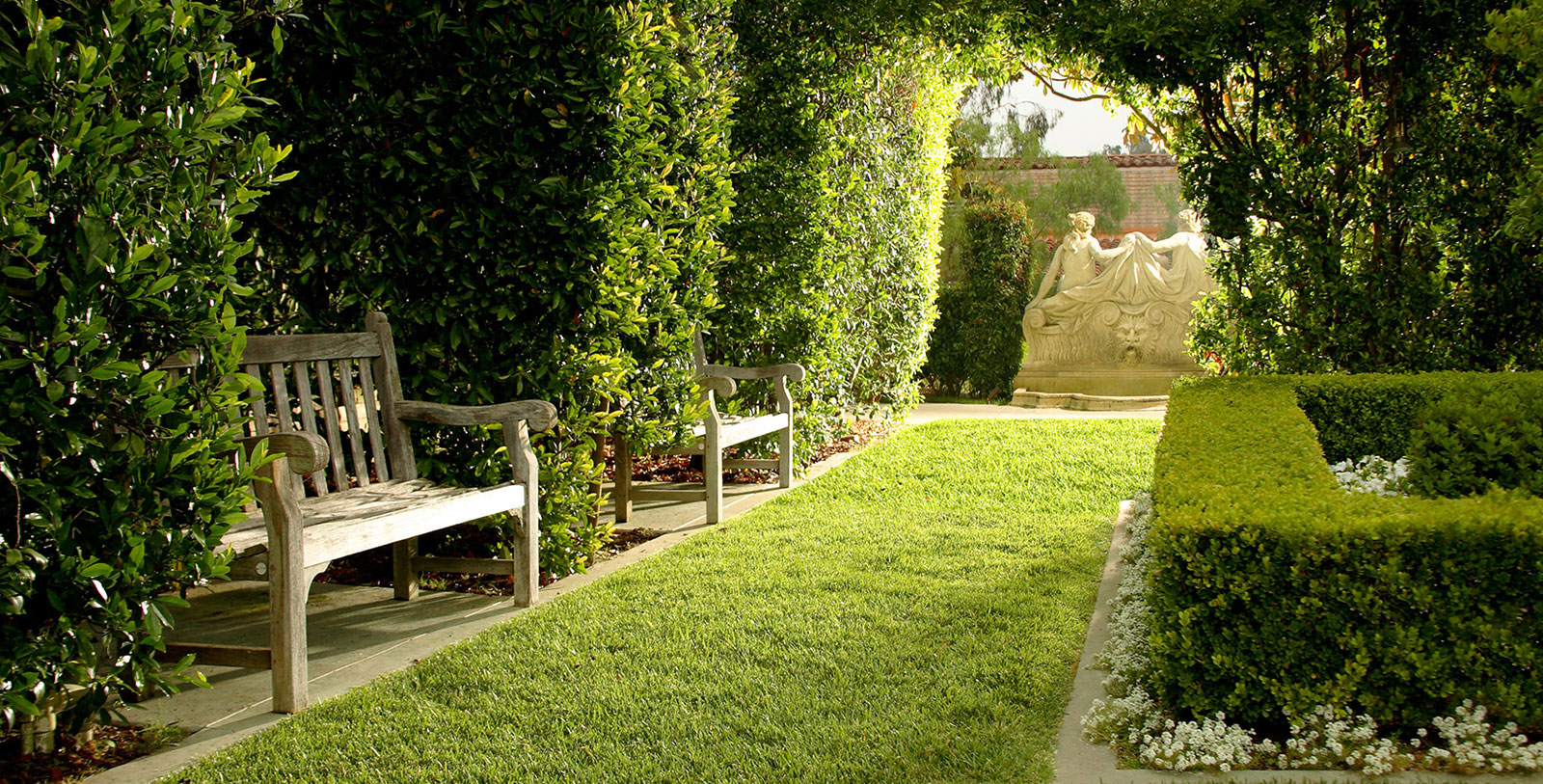
Over the years, the Rancho Bernardo Inn has become famous for its amazing architectural features. Perhaps its most noteworthy characteristic are the 21 beautiful fountains that reside throughout the grounds. Many of the fountains have their own rituals, which guests can practice in hopes of improving both their mental and spiritual wellbeing. For instance, couples deeply in love may wish to toss a rose pedal into the fountain, “Dreams of Eternity,” while anxious guests can place a lavender stem into the “Tranquility Fountain.” But the inn’s greatest fountain is the gorgeous “La Fontana di Santiago.” Imported directly from Vicenza, Italy, it serves as the centerpiece for the inn’s celebrated Santiago Courtyard. Two magnificent figures of a Greco-Roman-inspired god and goddess are located on the fountain, with a beautiful shell resting on their volutes. Further below is the mask of a lion, which shoots a controlled jet of water from its mouth. Statues of fish also spout their own streams into a giant clamshell that overflows into a sprawling, classically inspired basin. The fountain itself promotes serenity and relaxation, while also anchoring the landscape of the surrounding gardens.
The Rancho Bernardo Inn itself features the brilliant architectural form known as “Mediterranean Revival.” Mediterranean Revival-style architecture itself is a gorgeous structural aesthetic. Initially popular among American architects at the height of the Roaring Twenties, the form would remain an attractive design theme for decades. While most Revivalist styles typically mimicked one or two earlier architectural forms, Mediterranean Revival style took its inspiration from several, including Italian Renaissance, Spanish Colonial, and French Beaux-Arts. The amalgamation of so many unique design principles into one singular form was born out of a desire to create exotic buildings that closely resembled the different kinds of historic palaces scattered throughout the Mediterranean basin. As the modern hospitality industry exploded in Florida and California in the 1920s and early 1930s, American architects—as well as the hoteliers who served as their clients—hoped that such an appearance would epitomize the tropical atmosphere of their respective states. Architects August Gieger and Addison Mizner were the two most prominent professionals to popularize the style in Florida, while the likes of Bertram Goodhue and Sumner Spaulding used it frequently in California. Mediterranean Revival-style typically relied on a regular, rectangular floorplan that featured grandiose, symmetrical façades. Stucco exterior walls and red-tile roofs were perhaps the greatest structural elements. American architects also incorporated wrought iron balconies into the overall design, as well as numerous keystones and arched windows with grilles.
The Architecture
Over the years, the Rancho Bernardo Inn has become famous for its amazing architectural features. Perhaps its most noteworthy characteristic are the 21 beautiful fountains that reside throughout the grounds. Many of the fountains have their own rituals, which guests can practice in hopes of improving both their mental and spiritual wellbeing. For instance, couples deeply in love may wish to toss a rose pedal into the fountain, “Dreams of Eternity,” while anxious guests can place a lavender stem into the “Tranquility Fountain.” But the inn’s greatest fountain is the gorgeous “La Fontana di Santiago.” Imported directly from Vicenza, Italy, it serves as the centerpiece for the inn’s celebrated Santiago Courtyard. Two magnificent figures of a Greco-Roman-inspired god and goddess are located on the fountain, with a beautiful shell resting on their volutes. Further below is the mask of a lion, which shoots a controlled jet of water from its mouth. Statues of fish also spout their own streams into a giant clamshell that overflows into a sprawling, classically inspired basin. The fountain itself promotes serenity and relaxation, while also anchoring the landscape of the surrounding gardens.
The Rancho Bernardo Inn itself features the brilliant architectural form known as “Mediterranean Revival.” Mediterranean Revival-style architecture itself is a gorgeous structural aesthetic. Initially popular among American architects at the height of the Roaring Twenties, the form would remain an attractive design theme for decades. While most Revivalist styles typically mimicked one or two earlier architectural forms, Mediterranean Revival style took its inspiration from several, including Italian Renaissance, Spanish Colonial, and French Beaux-Arts. The amalgamation of so many unique design principles into one singular form was born out of a desire to create exotic buildings that closely resembled the different kinds of historic palaces scattered throughout the Mediterranean basin. As the modern hospitality industry exploded in Florida and California in the 1920s and early 1930s, American architects—as well as the hoteliers who served as their clients—hoped that such an appearance would epitomize the tropical atmosphere of their respective states. Architects August Gieger and Addison Mizner were the two most prominent professionals to popularize the style in Florida, while the likes of Bertram Goodhue and Sumner Spaulding used it frequently in California. Mediterranean Revival-style typically relied on a regular, rectangular floorplan that featured grandiose, symmetrical façades. Stucco exterior walls and red-tile roofs were perhaps the greatest structural elements. American architects also incorporated wrought iron balconies into the overall design, as well as numerous keystones and arched windows with grilles.
Famous Historic Guests
- Bob Hope, comedian and patron of the United Service Organization (USO).
- Bing Crosby, world-famous singer and actor known for his roles in Going My Way and The Bells of St. Mary’s.
- Art Wall Jr., winner of 1 major golf championship—The Masters Tournament in 1956.
- Sally Little, winner of 2 major golf championships, including the Women’s PGA Championship
- Jimmy Connors, tennis player who won 8 majors and 17 Grand Prix Super Series titles, among many other records.
- John McEnroe, tennis player who won 7 Grand Slam single titles and 9 Grand Slam doubles titles.
- Björn Borg, tennis player who won 11 Grand Slam single titles and 16 Grand Prix Super Series titles.
Film, TV and Media Connections
- Traffic (2002)
- American Idol (2007)