
History
Discover Grand Hotel, which was a summer retreat for vacationers on Mackinac Island who arrived by lake steamer from Chicago or Detroit.
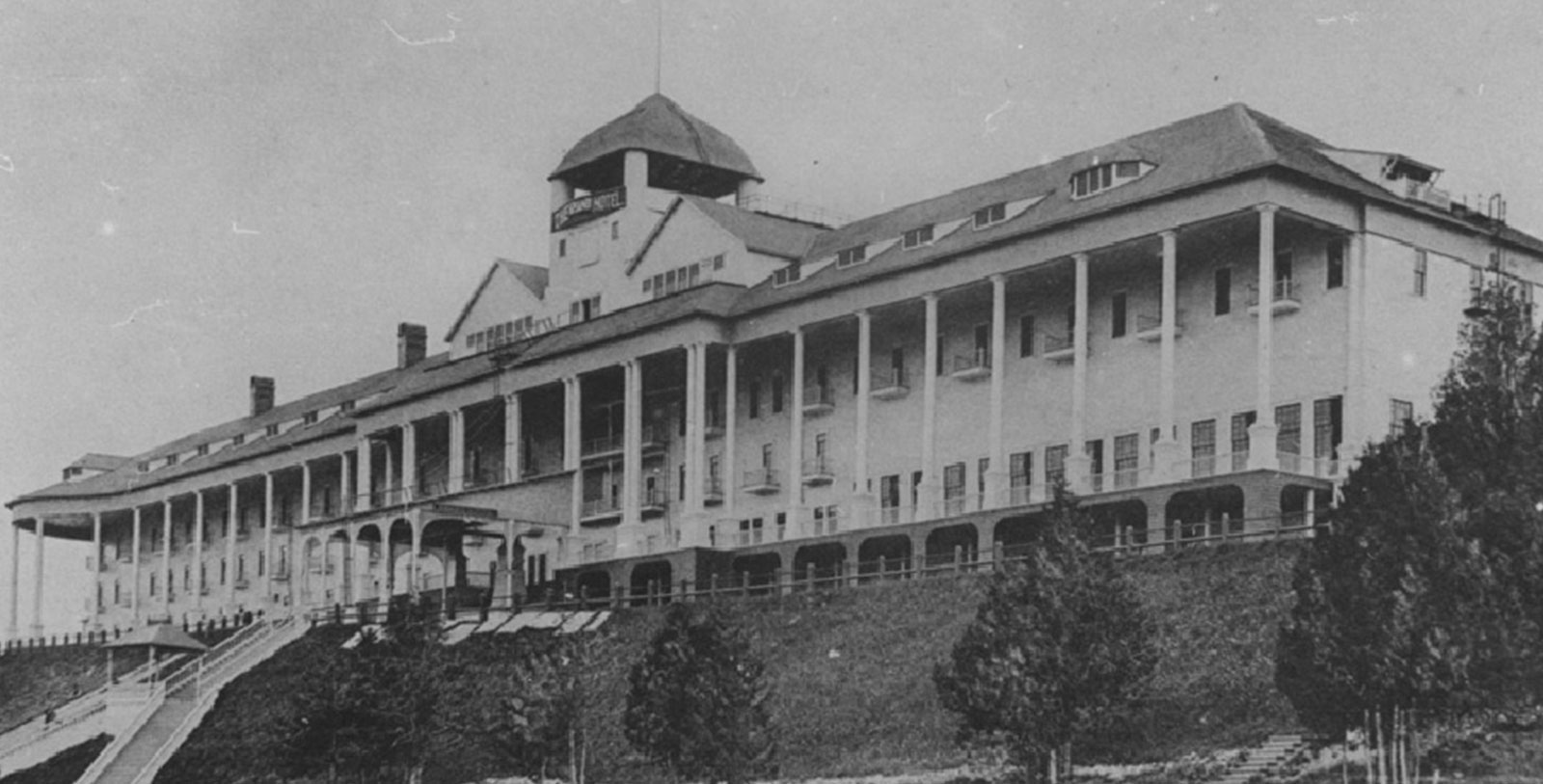
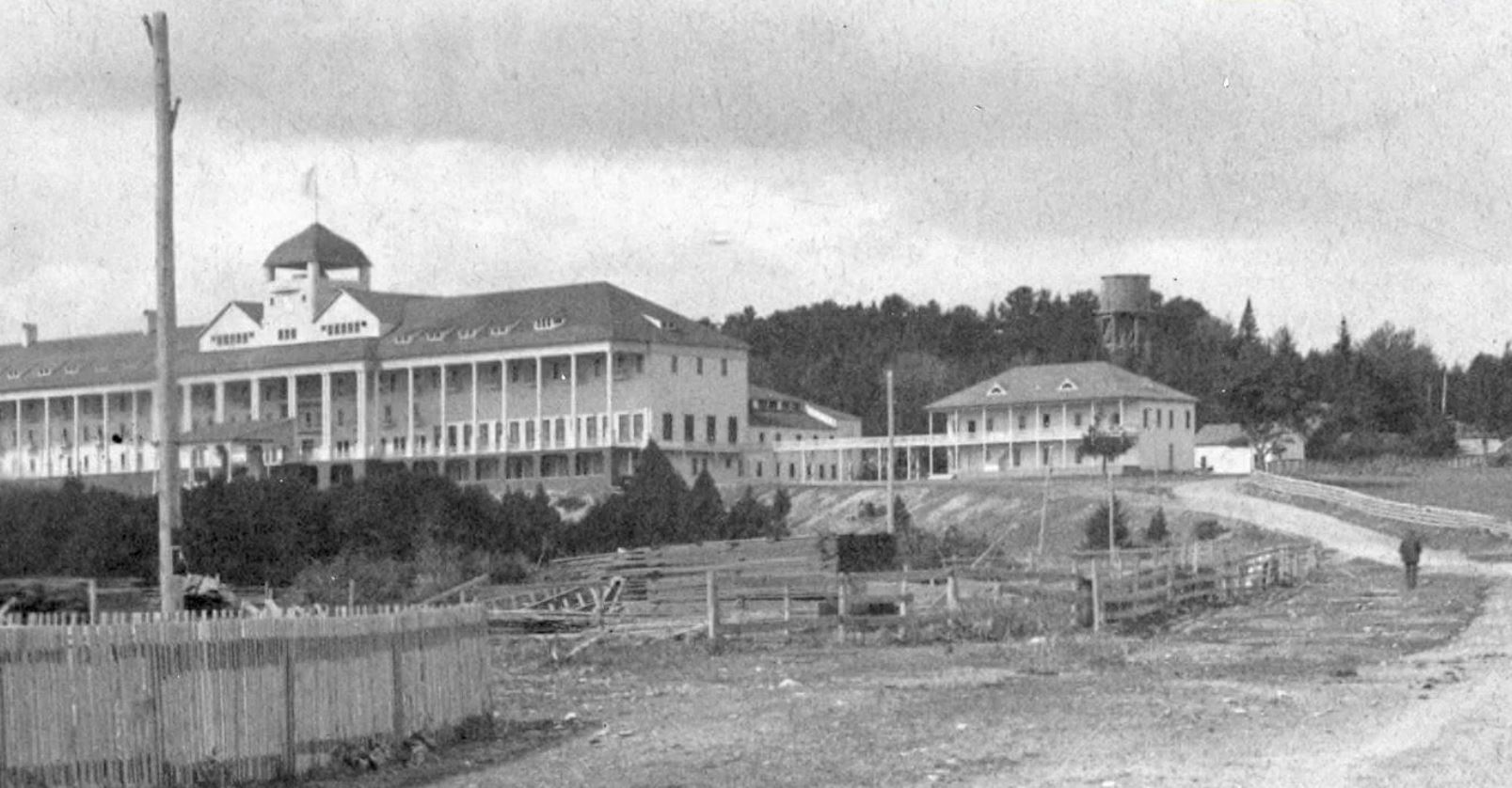
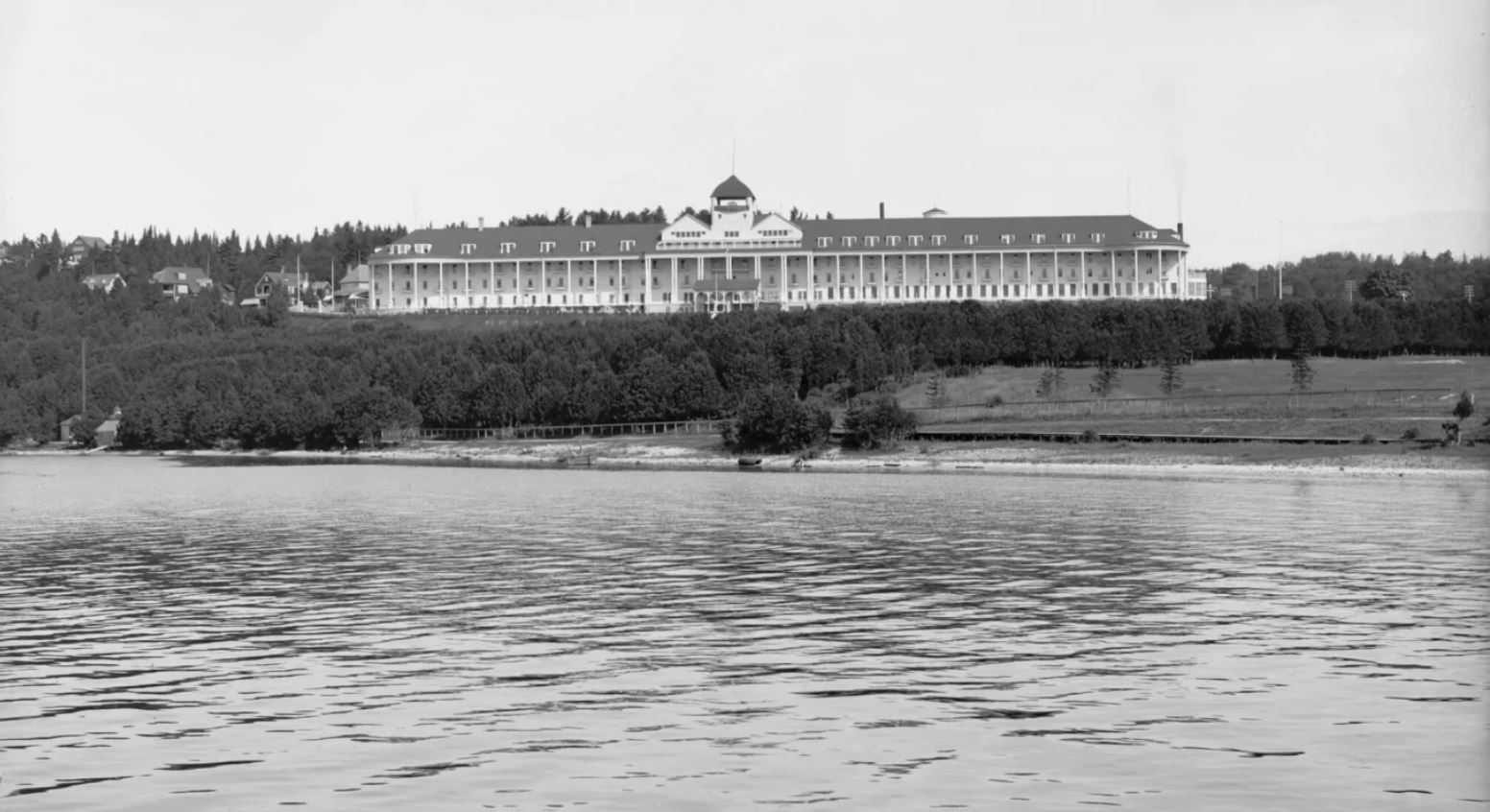
A member of Historic Hotels of America since 2001, Grand Hotel on Mackinac Island, Michigan, is one of the last surviving Grand Dames of the Gilded Age. It first opened at a time when Mackinac Island itself was rapidly transforming into a preeminent vacation hotspot for throngs of Midwestern tourists. Sensing opportunity, representatives from the Michigan Central Railroad, the Grand Rapids and Indiana Railroad, and the Detroit and Cleveland Steamship Navigation Company formed the Mackinac Island Hotel Company. These individuals yearned to capitalize upon the nation’s growing desire for recreational travel and saw Mackinac Island as the perfect place to construct a luxurious hotel. To create what they hoped would serve as America’s “Summer Palace,” the group commissioned the talented, Detroit-based architectural firm Mason and Rice to make their dream a reality. Construction then began in earnest and lasted for several months. The work was completely overseen by Charles Caskey, a prominent resort builder who had created a number of seasonal cottages throughout the area. Together with his brother-in-law Alphonse Howe, Caskey gradually created a stunning five-story resort hotel based on plans provided by Mason and Rice. The building soon featured a wealth of outstanding amenities, including dining facilities, meeting spaces, and 286 gorgeous guestrooms. Its exterior radiated stunning Queen Anne-inspired architecture, although accents of American Colonial Revivalism appeared all around the façade, too.
When it finally opened in 1887, Grand Hotel quickly emerged as the preferred destination for vacationers from places like Chicago, Detroit, and Montréal, among other places. The hotel's 600-foor Front Porch soon became the primary meeting spot for anyone on Mackinac Island, especially for island romantics who referred to it as “Flirtation Walk.” A number of leading American figures frequented Grand Hotel around this time as well, including Thomas Edison and Mark Twain. In fact, it was quite common to see Edison play with a few of his inventions while visiting, such as the time when he unveiled his phonograph on the front porch. The hotel even managed to attract such illustrious guests like Presidents Grover Cleveland and Theodore Roosevelt. In 1919, W. Stewart Woodfill joined Grand Hotel as a desk clerk. After serving the business in several capacities over the next few years, he purchased the hotel two decades later amid the Great Depression. Despite the economic uncertainty of the era, Grand Hotel nonetheless reached new heights in its popularity due to Woodfill’s outstanding stewardship. His management succeeded at increasing the number of guests to come to the hotel and even convinced Hollywood producers to shoot portions of the film, This Time for Keeps, on-site. Many influential guests continued to frequent the hotel during his tenure, including additional Presidents like Franklin Delano Roosevelt, Harry S. Truman, and Dwight D. Eisenhower.
R.D. “Dan” Musser joined the staff as a cashier during the 1950s and quickly rose through the ranks to become Woodfill’s most trusted lieutenant. Musser fell in love with the building and eventually purchased it outright from Woodfill in 1979. Under Musser’s watchful eye, the building grew exponentially while also maintaining its grand historical charm. Along with his wife, Amelia, Dan Musser initiated an ongoing series of renovations that continued to preserve the rich heritage of Grand Hotel. Musser and his family subsequently debuted many new facilities throughout the 1970s and 1980s, such as the Woodfill Conference Center and the Cupola Bar. Those facilities were then followed by the likes of Astor’s Hair Salon, Margaret’s Garden, and The Audubon Wine Bar two decades later. The Musser even began installing unique suites named in honor of several First Ladies, beginning with Lady Bird Johnson, Betty Ford, Rosalynn Carter, Nancy Reagan, and Barbara Bush. All the while, Grand Hotel retained its incredibly prestigious identity. A native of Grand Rapids, President Gerald Ford had a high-profile visit to Grand Hotel during his single term in office. The president enjoyed relaxing at Grand Hotel and even played a round on its golf course, now known as “The Jewel Golf Course.” Christopher Reeves, Jane Seymour, and Christopher Plummer then arrived while filming large portions of Jeannot Szwarc’s romantic drama, Somewhere in Time. Like This Time for Keeps, Somewhere in Time was mostly shot inside Grand Hotel itself!
The expansion of the hotel continued into the next century with the construction of the Millennium Wing, which debuted in 2001. This fantastic location features a 300-seat addition to the Main Dining Room, 42 new guestrooms and The Grand Pavilion—a 3,600-square-foot private meeting room and dining room. For years, this spectacular historic hotel has acquired numerous awards and accolades. The Michigan Historical Association first identified Grand Hotel as a State Historical Building in 1957. The U.S. Department of the Interior then listed it on the National Register of Historic Places in 1972, later recognizing it as a National Historic Landmark in 1989. The Michigan Department of Energy, Labor & Economic Growth also certified the hotel as a “Green Lodging Michigan Leader” in 2009, due to the reduction of its own carbon footprint. Grand Hotel is even received a Four-Diamond rating from the American Automobile Association (AAA), and consistently ranks among the best historic hotels in Historic Hotels of America. Indeed, Historic Hotels of America has bestowed Grand Hotel with a few of its prestigious Awards of Excellence, including “Historic Hotels of America Best Historic Restaurant” (2018) and “Historic Hotels of America Best Social Media of a Historic Hotel” (2021). Now under the ownership of KSL Capital Partners, Grand Hotel continues to be one of the most celebrated holiday destinations in the entire country. Its luxury and heritage are certain to enchant generations of guests for decades to come.
Hotel Timeline
The Location
Located within the Straits of Mackinac, Mackinac Island has been among the nation’s most celebrated holiday destinations since the late Victorian era. People from across the Midwest flocked to the island for its temperate weather and reclusive environment. In order to safeguard its rustic charm, many of the island's permanent residents passed legislation prohibiting vehicles onto the island. This ordinance is still in effect today, which helps to preserve Mackinac Island’s historical character. But before Mackinac Island became an internationally renowned vacation retreat, it once was home to traveling bands of the Anishinaabe. They specifically thought of the island to be scared, believing that the Great Spirit inhabited it following the end of a cataclysmic flood. Indeed, archeologists have since located all kinds of native artifacts along the coastline, including fishhooks, arrowheads, and other items. (Burial mounds for ancient chieftains have even been discovered around the area in recent years, too.) While records regarding the first European to arrive at Mackinac Island are scant, some historians speculate that it was Jean Nicolet during his journey to modern-day Wisconsin in the 17th century. Priest Claude Dablon then arrived several decades later to establish a short-lived mission on Mackinac Island. Jacques Marquette eventually replaced him in 1671, who decided to relocate the facility to St. Ignace. Nevertheless, a small fur trading outpost emerged on Mackinac Island, as the nearby Straits of Mackinac became an important nexus in French Canada.
Mackinac Island fell under British control during the late 18th century. Major Patrick Sinclair specifically landed during the American Revolutionary War and built a citadel called “Fort Mackinac.” Despite its imposing nature, Fort Mackinac was never attacked during the conflict. In fact, the British eventually surrendered the base to the nascent United States military at the end of the war! However, the British kept their desire to control Fort Mackinac and attempted to seize it outright at the start of the War of 1812. Indeed, the Royal Army managed to surprise the American garrison on-site amid a quick invasion of Mackinac Island. Looking to solidify their hold over the citadel, the British developed another base—Fort George—on the heights behind Fort Mackinac. American commanders yearned to take Mackinac Island and launched their own counteroffensive in 1814. The battle failed with the Americans’ second-in-command, Major Andrew Hunter Holmes, killed in the ensuing gunfight. Mackinac Island ultimately returned to the United States via the Treaty of Ghent, which concluded the war. In its wake, an influential population of Native American and French-speaking fur traders soon moved into the area, giving it a unique identity that was to last for decades. John Jacob Astor even located his American Fur Company on the island, which helped him amass an incredible fortune. The military presence was finally removed when Fort Mackinac closed permanently at the height of the Gilded Age.
Mackinac Island then started to become a popular tourist destination once the federal government made the area a national park during the 1870s. Word quickly spread of the island’s bucolic tranquility, inspiring many from across the Midwest to come and experience its charm. Soon enough, charters were ferrying guests out to Mackinac Island every year, making the site one of the most active places in the Great Lakes. A few transportation companies built a variety of hotels—including Grand Hotel—throughout the remainder of the 19th century, as well. But Mackinac Island was also gradually dotted with quaint seasonal cottages that wealthy industrialists had constructed to serve as their private retreats. As soon as the island reverted to the status of a state park in the 1890s, the newly empowered Mackinac Island State Park Commission took great pains to limit any future real estate developments. Thanks to the legislation, the commission’s actions have since guaranteed that Mackinac Island’s iconic serenity has remained largely untouched well into the present. The island has since preserved its status as one of America’s top vacation destinations, hosting thousands of people every year. Indeed, the island has hosted all kinds of illustrious guests, from Hollywood celebrities to sitting U.S. Presidents. Cultural heritage travelers have particularly enjoyed visiting the island regularly due to the many unique historical landmarks located in the vicinity. The attraction that those guests have found to be the most fascinating is the retired Fort Mackinac, which exists today as a museum open to public exploration.
The Architecture
In the 1880s, the representatives of the Mackinac Island Hotel Company began constructing a brilliant hotel on Mackinac Island that would capitalize upon the nation’s growing desire for recreational travel. The group subsequently hired the Detroit-based architectural firm, Mason and Rice, to design the project, although Charles Caskey and his brother-in-law—Alphonse Howe—directly oversaw the project. When construction concluded a year later, the building debuted with 286 outstanding accommodations. Grand Hotel’s original owners later installed additional wings to the hotel in 1897 and 1912, which greatly increased the number of facilities located on-site. Among the buildings constructed around that time are a Superintendent’s Residence, a Carpenter’s Shop, a Powerhouse, a stable for 50 horses, and the Grand Hotel’s West Wing. Grand Hotel has since experienced a series of extensive renovations that have sought to modernize it, while also preserving its rich historical ambiance. The Musser family specifically added several new additions in 1987, such as the Woodfill Conference Center and the Cupola Bar. Special boutique shops appeared a few years later in the mid-1990s, like Astor’s Hair Salon, Rebecca’s, Margaret’s Garden, and Grand Hotel & Co., Fine Jewelry. The Mussers also developed a series of suites named in honor of prominent former First Ladies, such as Lady Bird Johnson, Nancy Reagan, and Barbara Bush. (Those suites were then joined by The Jacqueline Kennedy Suite and The Laura Bush Suite during the 2000s.) The construction of this suite coincided with the addition of some 60 other guestrooms, which raised the total number of accommodations at the hotel to 393.
When Mason an Rice first began designing the Grand Hotel at the height of the Gilded Age, they specifically used Queen-Anne-style architecture as the main source of their inspiration. A successor to Eastlake architecture, Queen Anne itself became a widely popular architectural style at the height of the Gilded Age. Named in honor of 18th-century British monarch, Queen Anne, the architectural form started in England before migrating to the United States. Yet, its name is misleading, as it actually borrowed its design principles from buildings constructed during the Renaissance. While the appearance of Queen Anne-style buildings may differ considerably, they are all united by several common features. For instance, they are typically asymmetrical in nature, and are built with some combination of stone, brick, and wood. Those buildings also feature a large wrap-around porch, as well as a couple of polygonal towers. Those towers may also be accompanied by turrets along the corners of a building’s exterior façade. Queen Anne structures also have pitched, gabled roofs made with irregular shapes and patterns. Intricate wood carvings are a common sight throughout their layout, too, and are often designed in such a way to resemble different objects like an illusion. Clapboard paneling and half-timbering are a few other forms of woodworking that are regularly found somewhere within a Queen Anne-style structure. Grand Hotel today stands as a brilliant example of preserved Queen Anne-style architecture of the age. In fact, its architectural appearance and integrity played a major role in the U.S. Department of the Interior’s decision to have it designated a U.S. National Historic Landmark.
But Grand Hotel also showcased elements of Colonial Revivalism when it first debuted, too. Colonial Revival architecture today is perhaps the most widely used building form in the entire United States. It reached its zenith at the height of the Gilded Age, where countless Americans turned to the aesthetic to celebrate what they feared was America’s disappearing past. The movement came about in the aftermath of the Centennial International Exhibition of 1876, in which people from across the country traveled to Philadelphia, Pennsylvania, to commemorate the American Revolution. Many of the exhibitors chose to display cultural representations of 18th-century America, encouraging millions of people across the country to preserve the nation’s history. Architects were among those inspired, who looked to revitalize the design principles of colonial English and Dutch homes. This gradually gave way to a larger embrace of Georgian and Federal-style architecture, which focused exclusively on the country’s formative years. As such, structures built in the style of Colonial Revival architecture featured such components as pilasters, brickwork, and modest, double-hung windows. Symmetrical designs defined Colonial Revival-style façades, anchored by a central, pedimented front door and simplistic portico. Gable roofs typically topped the buildings, although hipped and gambrel forms were used, as well. This building remained immensely popular for years until largely petering out in the late-20th century. Nevertheless, architects today still rely upon Colonial Revival architecture, using the form to construct all kinds of residential buildings and commercial complexes.
Famous Historic Guests
- Thomas Edison, inventor known for such inventions as the motion picture camera and the light bulb.
- Mark Twain, author known for writing The Adventures of Tom Sawyer and Adventures of Huckleberry Finn.
- Jimmy Durante, comedian known for his roles in The Great Rupert and It Happened in Brooklyn.
- Esther Williams, actress known for her roles in Million Dollar Mermaid and Bathing Beauty.
- Christopher Plummer, actor known for his roles in movies like Beginners, The Insiders, and The Sound of Music.
- Christopher Reeves, actor best remembered for his role as Superman in the 1978 film of the same name.
- Jane Seymour, actress best known for her roles in Live and Let Die and Dr. Quinn: Medicine Woman.
- Arnold Palmer, winner of seven major golf championships that include the PGA Championship and the Masters Tournament.
- Grover Cleveland, 22nd and 24th President of the United States (1885 – 1889; 1893 – 1897)
- Theodore Roosevelt, 26th President of the United States (1901 – 1909)
- Franklin Delano Roosevelt, 32nd President of the United States (1932 – 1945)
- Harry S. Truman, 33rd President of the United States (1945 – 1953)
- Dwight D. Eisenhower, 34th President of the United States (1953 – 1961), and Supreme Allied Commander Europe during World War II.
- John F. Kennedy, 35th President of the United States (1961 – 1963)
- Gerald Ford, 38th President of the United States (1974 – 1977)
- Jimmy Carter, 39th President of the United States (1977 – 1981)
- George H.W. Bush, 41st President of the United States (1989 – 1993)
- Bill Clinton, 42nd President of the United States (1993 – 2001)
Film, TV and Media Connections
- This Time For Keeps (1947)
- Somewhere in Time (1980)
Guest Historian Series

Hotel History: Grand Hotel (1887), Mackinac Island, Michigan
The "Grand" as it is called on the island, is a historic coastal resort with a spectacular 660-foot long, three-story high porch. Below this covered veranda is a manicured lawn sloping down to a formal flower garden where 10,000 geraniums bloom in season among other flower beds with wild blossoms. The hotel is located on Mackinac Island which is in the straits between Lake Michigan and Lake Huron. It has thrived because of an important decision made in the 1920s. All private cars and trucks were outlawed on the island which gives visitors a chance to live in a village without automobiles. In their place, islanders depend on bicycles and horse- drawn carriages and wagons. Originally called Plank's Grand Hotel after its builder John Oliver Plank, one of America's top hotel builders and operators in the late 1880s and early 1900s.
CONTINUE READING