
History
Discover Omni Grove Park Inn, a mountain oasis adorned with distinctive stone architecture and founded by Edwin W. Grove.
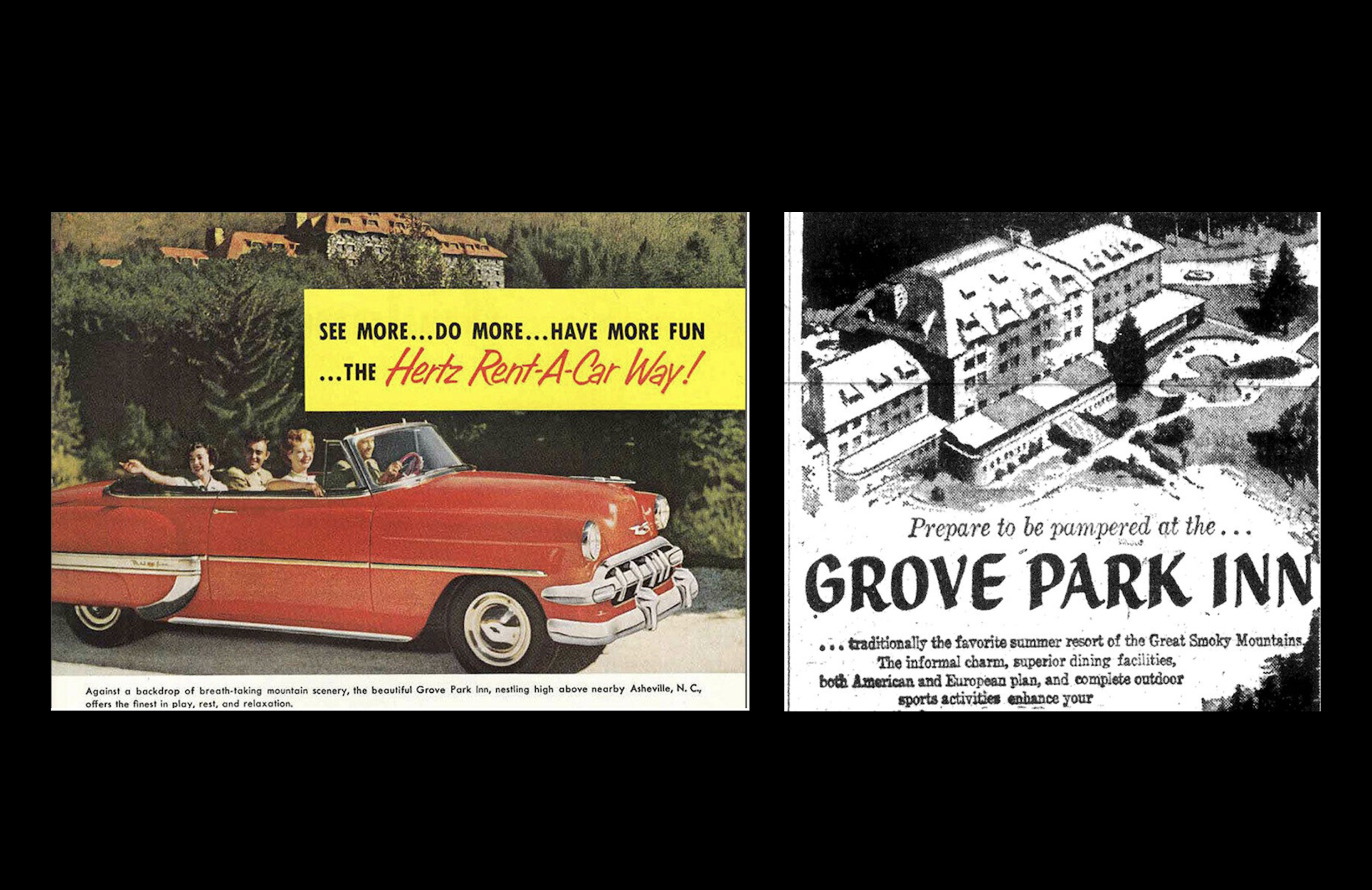
The history of Omni Grove Park Inn traces back to an aspiring pharmacist named Edwin Wiley Grove. Born on a rural farm in the 1850s, Grove pursued a career in pharmaceuticals in order to elevate himself out of severe poverty. The first step in Grove’s grand plan involved purchasing a pharmacy in Paris, Tennessee, where he invested all of his time formulating a tasteless formula that could fight malaria. Grove had created a beverage that he called “Grove’s Tasteless Chill Tonic” after several years of experimentation, which purportedly relieved the symptoms of the disease almost immediately. His tonic became an overnight success, becoming a household name for other contemporary concoctions like Coca-Cola. Grove had even managed to sell 1.5 million bottles of his tonic over the course of two decades, amassing a great fortune in the process. It was around this time that Grove first discovered Asheville. Often ill with bronchitis, Grove’s doctors recommended that he convalesce in the clean mountain air of western North Carolina. As such, he stumbled upon Asheville and quickly fell in love with it.
Despite his poor health, Grove continued to push himself to create bigger and better pharmaceutical inventions. He traveled the nation looking for new business partners, as well as novel sources of inspiration. On one trip to Detroit, Grove encountered a like-minded soul named Fred Seely. The men formed a strong friendship that was to last for years. Grove eventually invited Seely to his summer residence in Asheville, where they decided to work together operating the Paris Medicine Company. Grove and Seely nonetheless started to see that another economic opportunity awaited them in Asheville itself. The two realized that the tranquil environs of Asheville provided the perfect setting in which to promote the health and well-being of the nation’s weary. They quickly began planning for the creation of a grand hotel that would embody those sentiments. In 1909, Grove and Seely purchased some 400 acres of land near Sunset Mountain to serve as the site of their secluded retreat.
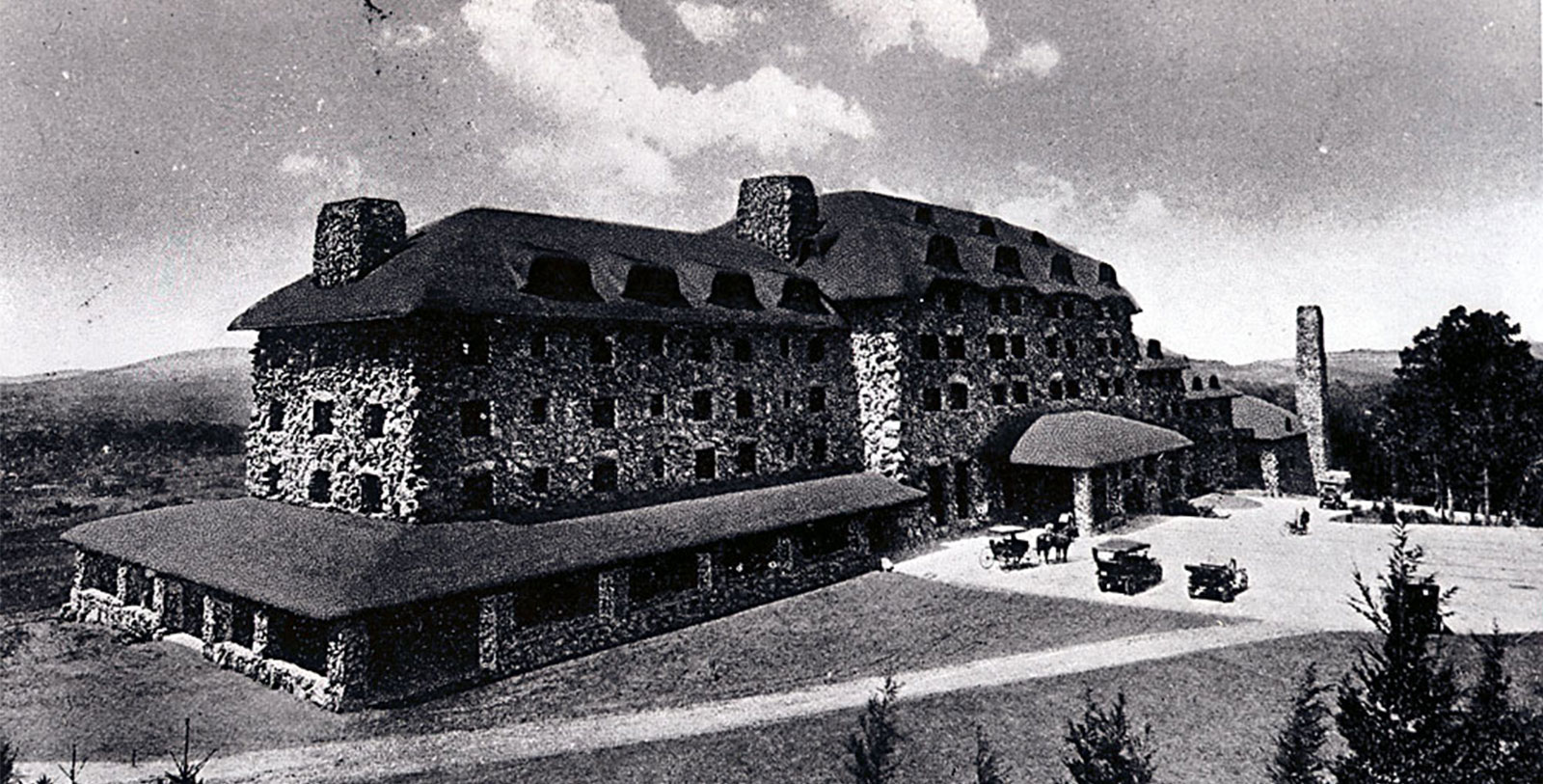
Grove and Seely then began to construct their mountainside hotel not long thereafter. But they struggled to find the right architectural layout, having rejected the plans from several prominent architects. Seely eventually resolved the problem by presenting his own sketch of the hotel, which Grove quickly adored. Seely’s own plan called for the use of Arts and Crafts-style architecture in the hope that the structure would properly reflect the rustic culture of the Blue Ridge Mountains. The project proved to be a mammoth undertaking. Some 400 men worked on building, often logging 10 hours per shift over a six-day work week. The construction crew lugged thousands of pounds of granite up the mountain, with just the use of rudimentary tools like mules and wagons. Nevertheless, Seely, Grove, and their massive team managed to complete the hotel in just under a year. Named “The Grove Park Inn,” the doors swung open for the first time on July 12, 1913. Then Secretary of State, William Jennings Bryan, even gave the keynote address, in which he proclaimed that the destination, “was built for the ages.”
Charles Sammons of the massive real estate conglomerate, Sammons Enterprises, acquired the entire building in 1955. Through Sammons Enterprises, Charles Sammons and his family significantly transformed The Grove Park Inn into a leading international resort. The culmination of their work transpired during the late 1980s, when they added the resort’s renowned multimillion-dollar spa facility. The Sammons eventually sold The Grove Park Inn to KSL Resorts in 2012, which, in turn, sold it to Omni Hotels and Resorts roughly a year later. The company then began an extensive rehabilitation of the entire resort at a cost of $25 million. Omni Hotels and Resort subsequently renamed the location as “The Omni Grove Park Inn.” A member of Historic Hotels of America since 2007, The Omni Grove Park Inn still maintains its status as being one of the most exclusive places in vacation throughout the entire United States.
Hotel Timeline
The Location
Omni Grove Park Inn is located in the quaint community of Asheville, North Carolina. A town steeped in history, Asheville features over 100 different locations that the U.S. Secretary of the Interior has listed on its National Register of Historic Places. The Omni Grove Park Inn is mere moments away from the Grove Park Historic District—a neighborhood recognized for its immense architectural diversity. Composed of some 290 buildings, the area was once a planned suburban community designed by Chauncey Beadle just prior to the outbreak of World War I. At the time, Beadle was known all over North America for his landscaping talents, having created countless parks and gardens across the southern United States. Most of the historic structures display different varieties of Colonial Revival, Tudor Revival, and Bungalow-style architecture. The Grove Park Inn is also close to many more celebrated historic sites, too, including the Thomas Wolfe Memorial, the Historic Greenwood Village, and the Montford Area Historic District.
Perhaps the greatest of these cultural landmarks is the Biltmore Estate. Constructed by the Vanderbilt family during the 1890s, the destination is a beautiful Gilded-Age mansion that is also the largest privately-owned house in the United States. The project had specifically been commissioned by George Washington Vanderbilt II, who was a prominent railroad and steamboat magnate during the late 19th century. Architect Richard Morris Hunt designed the structure to resemble a gorgeous French chateau, while the great Frederick Law Olmstead landscaped the 8,000 acres that surrounded the mansion. Measuring 178,926 sq. ft., Vanderbilt required a massive workforce to tend to the building. To facilitate such a large body of employees, he constructed the “Biltmore Village,” which had been known at the time as “Best.” The nucleus of this community still exists today, sitting adjacent to the mansion’s main entrance. The Biltmore Estate is now listed on the U.S. National Register of Historic Places and is recognized by the federal government as a National Historic Landmark. Despite its status as a private residence, the mansion is open to tours for the general public.
The Architecture
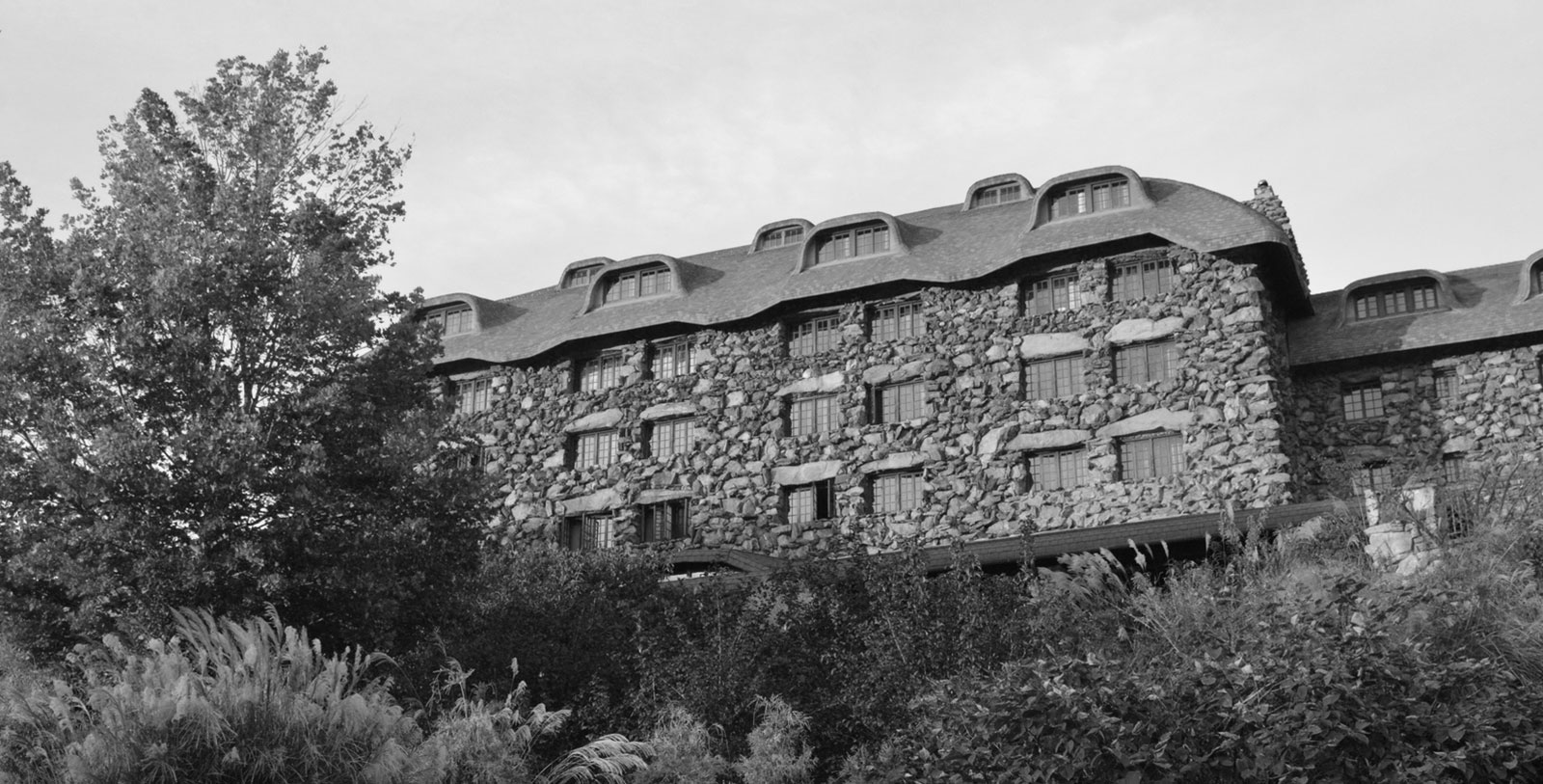
The construction of The Grove Park Inn proved to be a mammoth undertaking when it first began during the summer of 1912. Four-hundred men were needed to work on the project, who often worked 10-hour shifts over the course of a six-day work week. The construction crew lugged thousands of pounds of granite up Sunset Mountain, as well, with just the use of rudimentary tools like mules and wagons. Inspired by the design aesthetics of the Arts and Crafts movement, Seely’s plan for the building was incredibly meticulous, too. It directed the laborers to construct the hotel around a frame consisting of steel and concrete. Italian stonemasons then began the laborious process of fitting thousands of granite stones into the exterior façade. Steely had specifically instructed that every single stone show its most weather surface in order to give the building a timeless ambiance. He also designed an intricate fireproof roof made from a combination of concrete, asphalt, and red clay tile. The material was so thick that it measured three full feet in width. Despite the great demands of the project, they all miraculously managed to finish the project within the span of a single year.
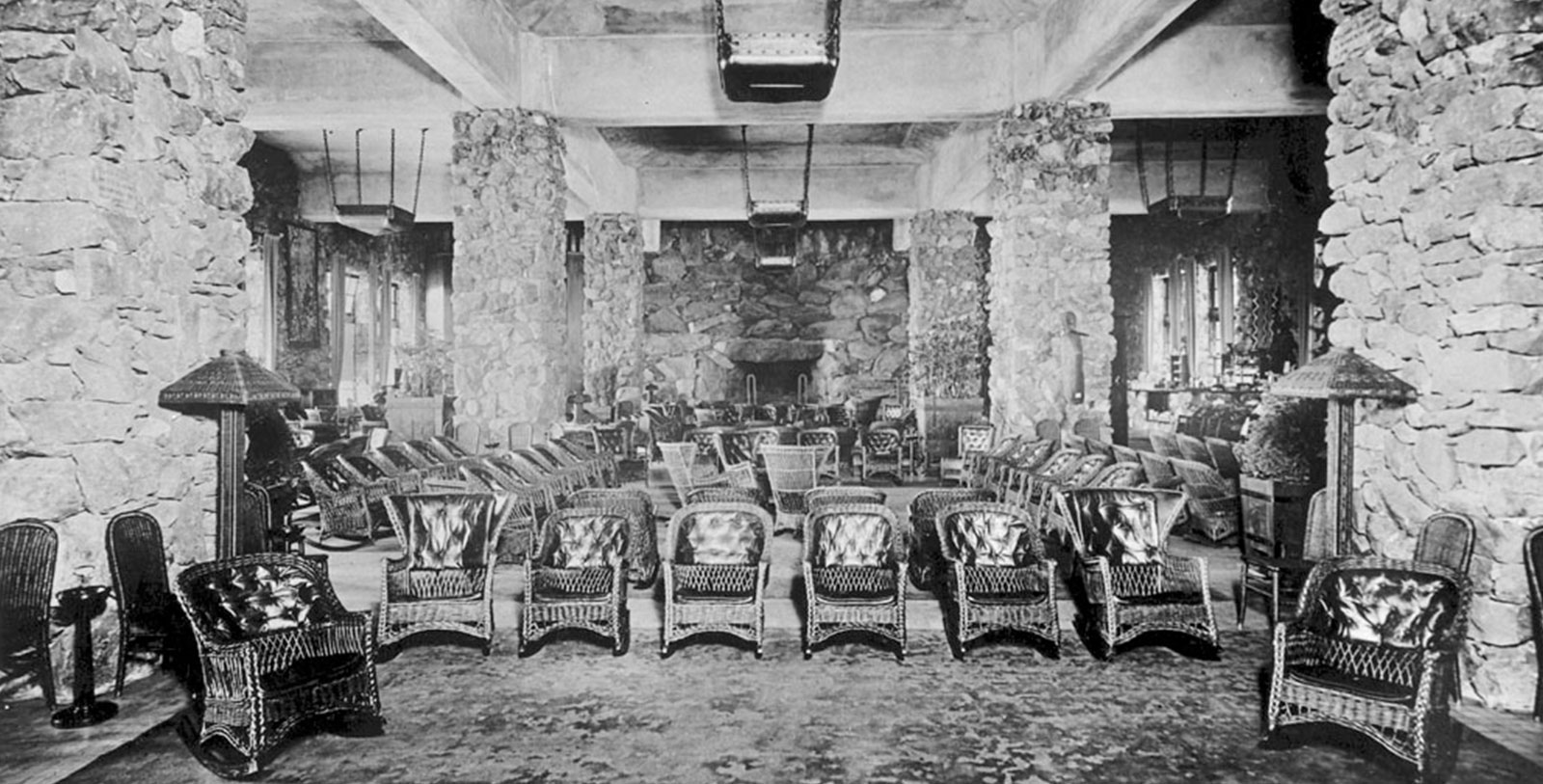
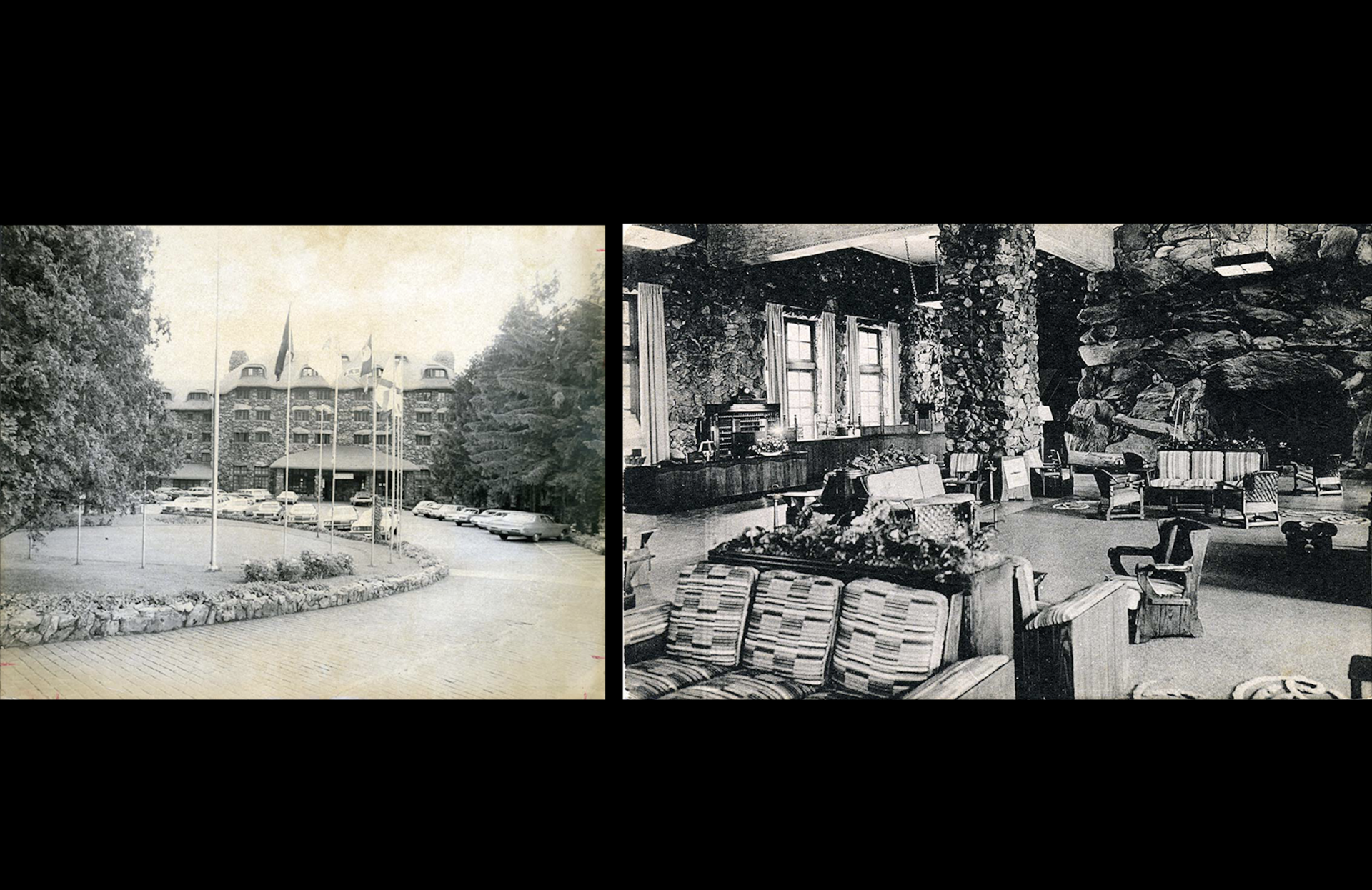
Seely and his team also applied their careful eye for detail to the hotel’s many interior spaces. The most notable area of work concerned an area known today as the Great Hall. This spectacular room is called the “Great Hall” for good reason, as it measures 120 feet in length. There are also two massive, 14-foot fireplaces, which serve as the centerpiece for the room. Its andirons weigh some 500 pounds and were constructed with the same granite stones that constituted the exterior of Omni Grove Park’s exterior façade. The two fireplaces originally functioned as the main source of heating during the winter, with the hotel’s staff using several nine-foot-long long for fuel. The lobby—as well as the rest of the resort—were also furnished with the finest décor from the Roycroft Artisan Community. Based out of East Aurora, New York, the craftsmen were among the best in the entire country. They supplied all of the 600 ornate light fixtures installed throughout The Omni Grove Park Inn, as well as the marvelous pieces of oak scattered across the building. The Roycroft Artisan Community also developed a marvelous eight-foot grandfather clock. It had a beautiful, hammered copper face that bore the insignia of the Roycroft Artisan Community on its left side. This elegant clock still resides adjacent to the resort’s main entrance, welcoming guests into The Omni Grove Park Inn in the same way it had over a century ago.
Famous Historic Guests
- Harry Houdini, famous illusionist and stunt performer.
- Al Jolson, actor and comedian known for starring in the first talking motion picture, The Jazz Singer.
- Will Rogers, actor known for his roles in such films like Judge Priest, In Old Kentucky, and Steamboat Round the Bend.
- Henry Ford, founder of the Ford Motor Company.
- John D. Rockefeller, founder of the Standard Oil Company.
- Harvey Firestone, founder of the Firestone Tire and Rubber Company.
- Charles Schwab, founder of the Bethlehem Steel Corporation.
- Thomas Edison, entrepreneur responsible for such inventions like the motion picture camera and the electric lightbulb.
- Albert Einstein, Nobel Prize winning physicist known for his role in developing quantum theory.
- Billy Graham, Baptist minister and spiritual advisor to every U.S. President from Harry S. Truman to Barack Obama.
- George Masa, Japanese businessman and professional large-format photographer.
- Wiley Post, aviator remembered for completing the first solo flight around the world.
- F. Scott Fitzgerald, author remember today for writing The Great Gatsby.
- Margaret Mitchell, author remember today for writing Gone with the Wind.
- Carl Sandburg, Pulitzer Prize-winning author known for his poems and biographical work.
- Alex Haley, author remembered today for writing Roots: The Saga of an American Family.
- George Gershwin, musician known today for his opera Porgy and Bess, as well as many other productions.
- Bobby Jones, Jr., professional golfer who helped found the Masters Tournament and the Augusta National Golf Club.
- Jack Nicklaus, winner of 18 major golf championships—the most of any professional golfer.
- John J. Pershing, commanding general of the American Expeditionary Force during World War I.
- William Jennings Bryan, Secretary of State under President Woodrow Wilson and participant in the Scopes Trial.
- Helen Keller, first deaf-blind person in American history to successfully earn a college degree.
- Eleanor Roosevelt, First Lady of former U.S. President Franklin Delano Roosevelt (1933 – 1945)
- William Howard Taft, 27th President of the United States (1909 – 1913) and 10th Chief Justice of the United States (1921 – 1930)
- Woodrow Wilson, 28th President of the United States (1913 – 1921)
- Calvin Coolidge, 30th President of the United States (1923 – 1929)
- Herbert Hoover, 31st President of the United States (1929 – 1933)
- Franklin Delano Roosevelt, 32nd President of the United States (1933 – 1945)
- Dwight D. Eisenhower, 34th President of the United States (1953 – 1961), and Supreme Allied Commander Europe during World War II.
- Richard Nixon, 37th President of the United States (1969 – 1974)
- George H.W. Bush, 41st President of the United States (1989 – 1993)
- Bill Clinton, 42nd President of the United States (1993 – 2001)
- Barack Obama, 44th President of the United States (2009 – 2017)
Women in History
Helen Keller: Helen Keller was one of the first guests to vacation at The Grove Park Inn—a distinction that the resort is proud to possess. She was the first deaf-blind person in American history to successfully earn a college degree. According to her biographers, Keller had become afflicted with an unknown illness as a toddler, which greatly impacted her sight and hearing. Her family stopped at nothing to get her the best help available, travelling all the way from their native Alabama to meet with eye, ear, and nose physicians in Baltimore. They, in turn, directed the Kellers to inventor Alexander Graham Bell, who had been working with deaf and blind children at the time. Bell informed the Kellers of a school called the Perkins Institute for the Blind in Boston that would provide the best education for Helen during her youth. Helen Keller was then paired with an alumnus of the academy named Anne Sullivan, who would guide the young girl through her lessons. It was the start of a historic relationship that would be immortalized in a series of films known as The Miracle Worker. Sullivan managed to aid Keller in learning how to communicate through sign language, with her first word being “water.” Keller quickly became proficient at reading sign language with her hands, as well as braille. As she got older, Keller enrolled in The Cambridge School for Young Ladies, and then Harvard University’s Radcliffe College. Keller graduated with top honors from Harvard, leaving the school as a member of Phi Beta Kappa. She then went on to establish a career as an author and motivation speaker that was hailed throughout the world. Keller also had an active political career, becoming a champion for such causes as global pacifism and women’s suffrage. She even helped found the American Civil Liberties Union in 1920. Yet, the cause that Keller is best remembered is her tireless campaigning for the rights of Americans who experienced some form of physical disability. Keller has since received numerous accolades for her work toward the end of her life, including the Presidential Medal of Freedom and a place in the National Women’s Hall of Fame.
Guest Historian Series
Hotel History: The Omni Grove Park Inn (1913), Asheville, North Carolina*
The Omni Grove Park Inn is a historic resort located in the Blue Ridge Mountains in Asheville, North Carolina. It was built by Edwin Wiley Grove (1850-1927), owner of the Paris Medicine Company, manufacturer of Bromo-Quinine and Tasteless Chill Tonic. When Grove could not find a local architect who grasped his concept, he entrusted the project to his son-in-law Fred Loring Seely, who had no formal training in architecture or the building trades. Nevertheless, Seely designed a magnificent lodge which was built of native uncut granite boulders quarried from Sunset Mountain. The Inn was furnished by the Roycrofters of East Aurora, New York, one of the most important designers and manufacturers of American Arts and Craft furniture, metal work and other accessories. Some 400 rugs were made in France, and linen curtains and spreads were imported from Ireland. To make the building fireproof, Seely designed a three-foot thick roof composed of cement, steel rods, asphalt and red clay tiles.
CONTINUE READING