John Rutledge House Inn
Charleston, South Carolina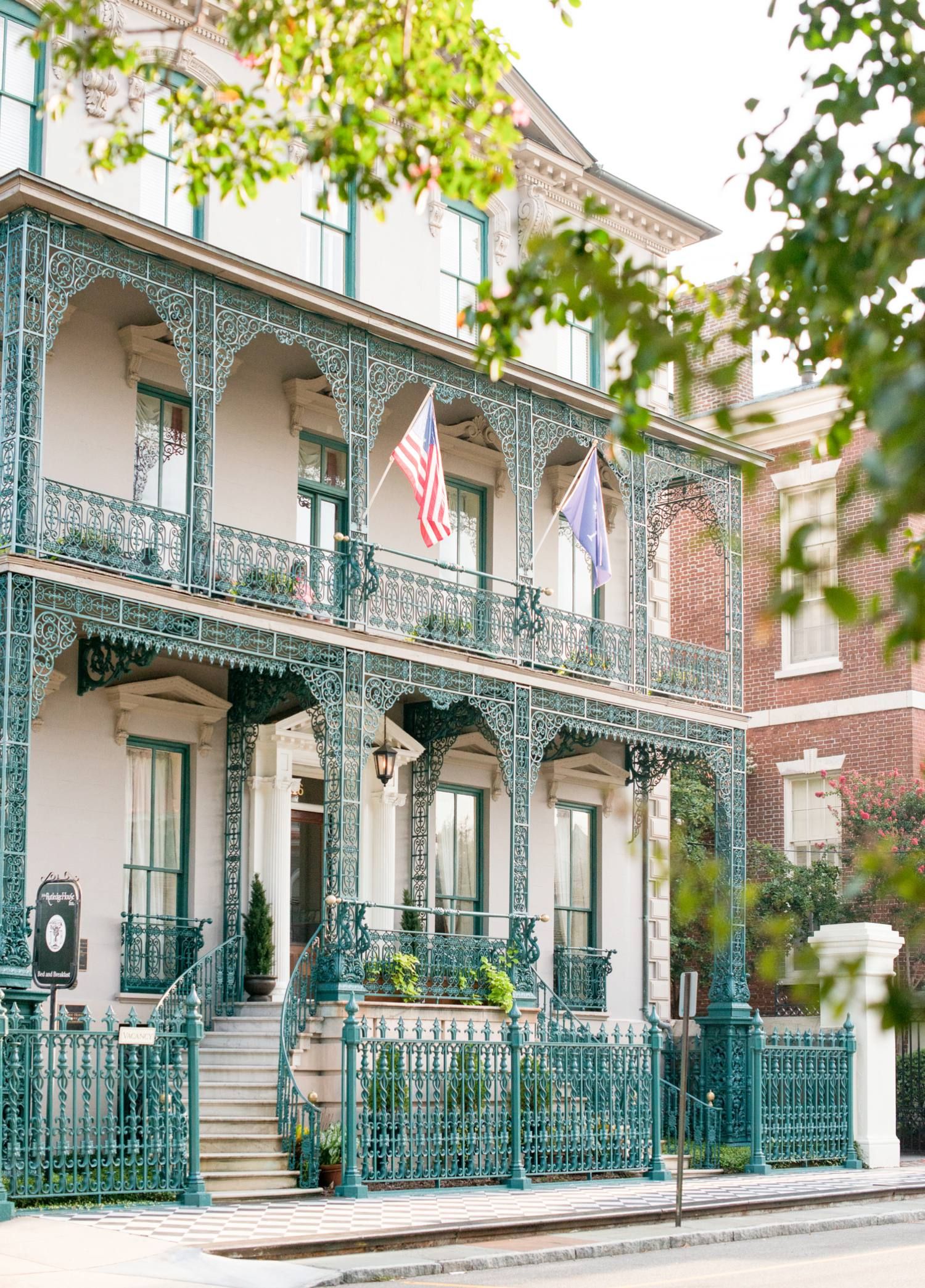
 116 Broad Street, Charleston, South Carolina 29401
Original Property Opened in 1763
Historic Hotels of America member since 1989
116 Broad Street, Charleston, South Carolina 29401
Original Property Opened in 1763
Historic Hotels of America member since 1989
- 2025 Historic Hotels of America® Annual Awards of Excellence Winners
- 2022 Historic Hotels of America® Awards of Excellence Nominee Finalists
- 2021 Historic Hotels of America® Awards of Excellence Winners
- The 2026 Top 25 Historic Hotels of America® Most Magnificent Gardens List Is Announced
- The 2025 Top 25 Historic Hotels of America® Most Haunted Hotels List Is Announced
- The 2025 Top 25 Historic Hotels of America® Culinary Heritage and Traditions List Is Announced
- The 2025 Top 25 Historic Hotels of America® Most Historic Bars List Is Announced
- The 2025 Top 25 Historic Hotels of America® Best of Adaptive Reuse List Is Announced
- The 2019 Historic Hotels of America Top 25 Most Magnificent Gardens Announced
- 2022 Top 25 Historic Hotels of America Most Unique Culinary Heritage and Traditions Announced
- The 2022 Top 25 Historic Hotels of America Most Magnificent Gardens List Announced
- The 2023 Historic Hotels of America Top 25 Afternoon Tea
- The 2023 Top 25 Historic Hotels of America Most Magnificent Gardens Announced
- The 2023 Top 25 Historic Hotels of America Culinary Heritage and Traditions List
- The 2024 Top 25 Historic Hotels of America® Where U.S. Presidents Made History List Is Announced
- The 2024 Top 25 Historic Hotels of America® Afternoon Tea Experiences List Is Announced
- The 2025 Top 25 Historic Hotels of America Most Romantic Hotels List is Announced
- The 2025 Top 25 Historic Hotels of America® in Film and Television History List Is Announced



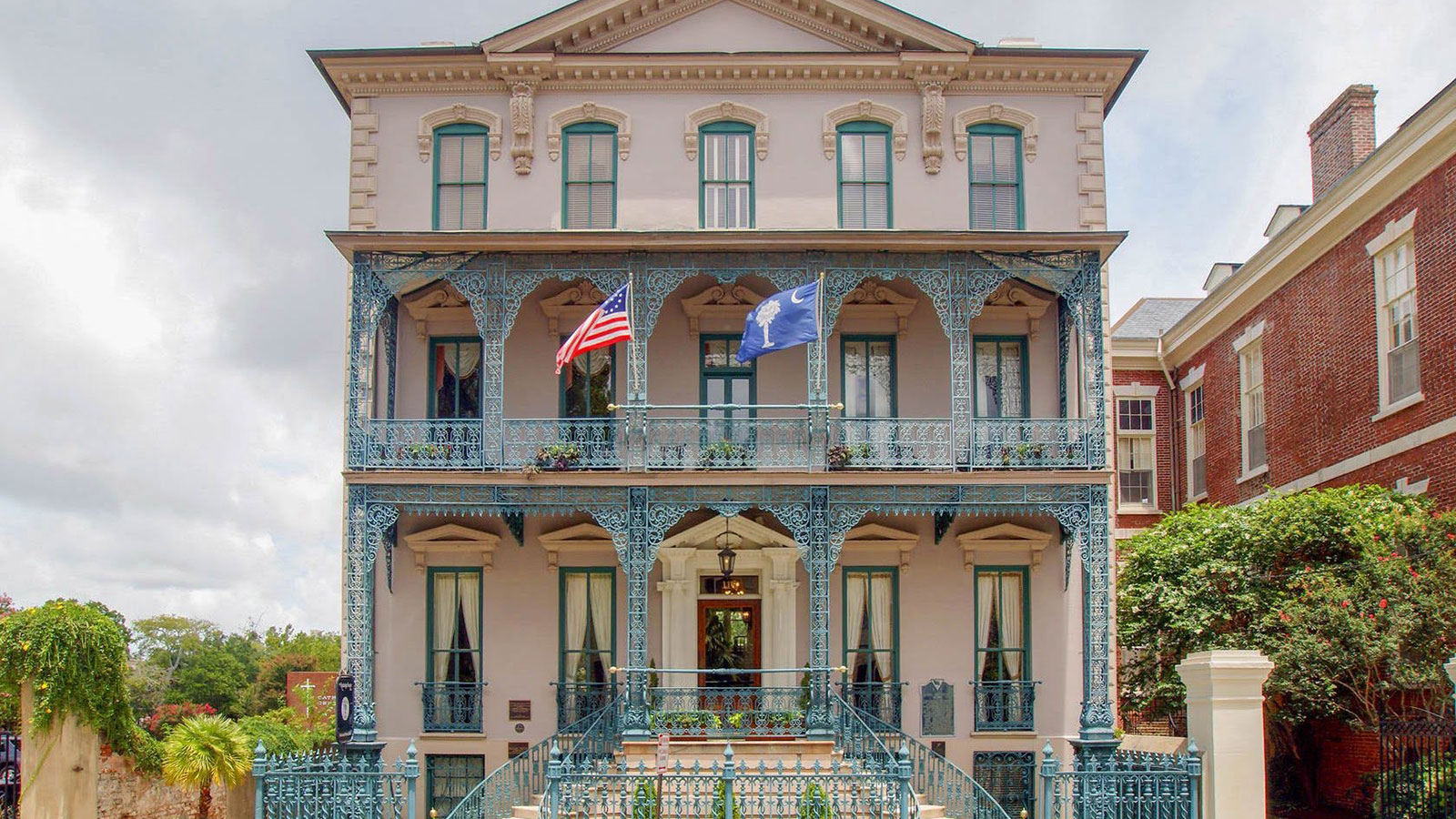
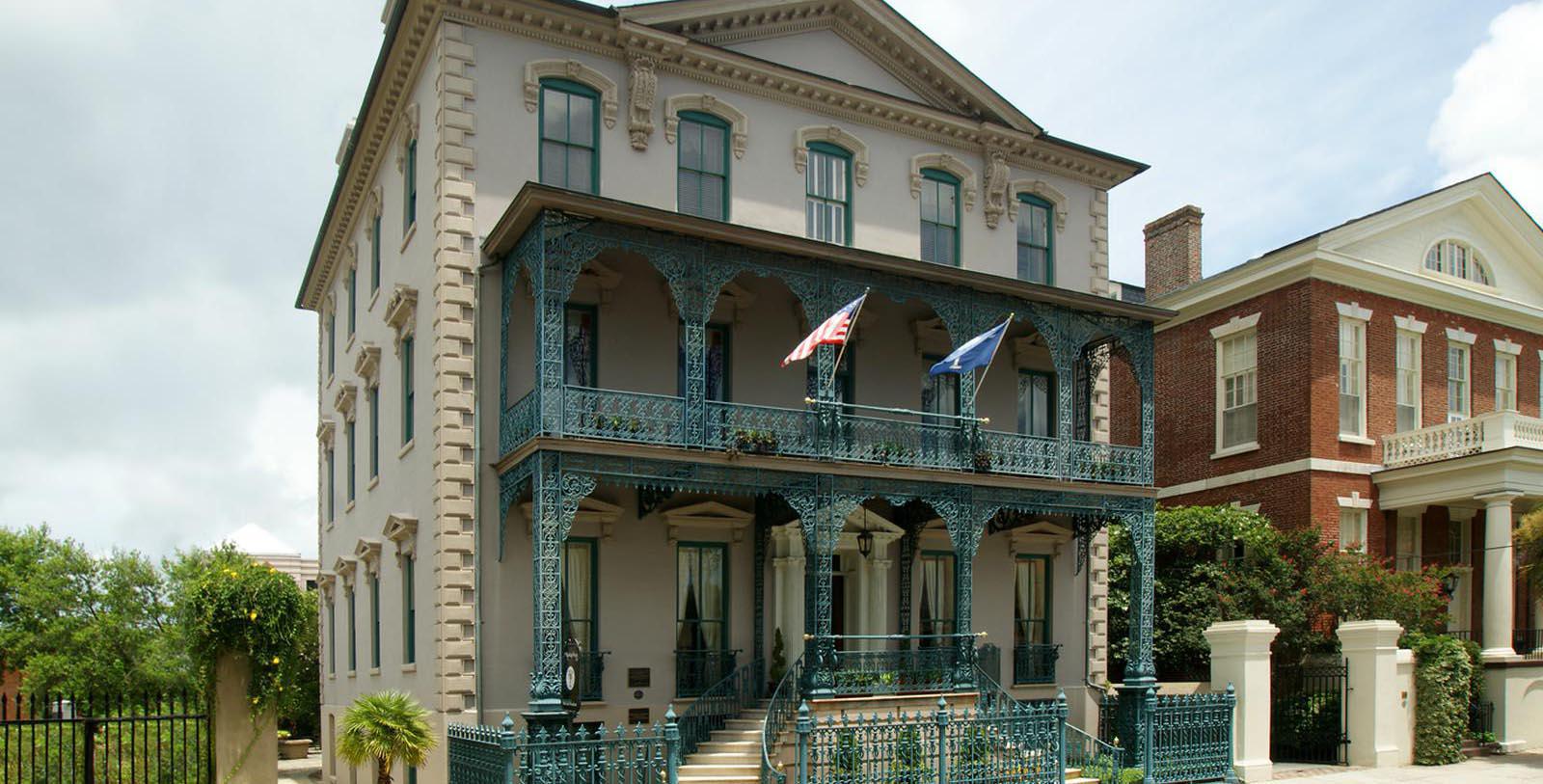
Constructed in 1763, John Rutledge House Inn® is both a National Historic Landmark and lovely boutique hotel in Charleston, South Carolina. It was once the home of John Rutledge, a signer of the U.S. Constitution and an esteemed South Carolina politician. Rutledge helped write several iterations of the document from the building’s second-floor drafting room. It is even rumored that She Crab Soup was created in the house at a party attended by President William Howard Taft during the 1920s. This amazing historical location became the John Rutledge House Inn® in 1989. Today, the Inn offers guests the opportunity to experience the unique elegance of a bygone era. Guests will find the hotel’s Broad Street location perfect for exploring surrounding Charleston.
Discover
- Discover the presidential history of John Rutledge House Inn. In its early years, the bed and breakfast was the private home of John Rutledge, one of the framers of the U.S. Constitution and a political ally of George Washington and John Adams. In fact, the Inn has the distinct honor of being one of the few surviving hotels that welcomed President Washington while he was in office, during his visit to Charleston in 1791. Later, when John Rutledge House Inn was the home of Mayor Robert Goodwyn Rhett, it played host to another presidential visit when Rhett entertained President William Taft over dinner in the 1920s.
- Witness where jurist John Rutledge penned several iterations of the United States Constitution. One of the country's Founding Fathers and the chairman of the drafting committee, Rutledge drafted multiple versions of the Constitution from the comfort of his second-floor drawing room, now known as the Signers Ballroom, and, later, went on to sign the founding document alongside other framers like Alexander Hamilton, James Madison, Benjamin Franklin, and George Washington. Today, the ballroom is a charming setting for intimate events, as well as an available dining venue for the Inn's complimentary breakfast.
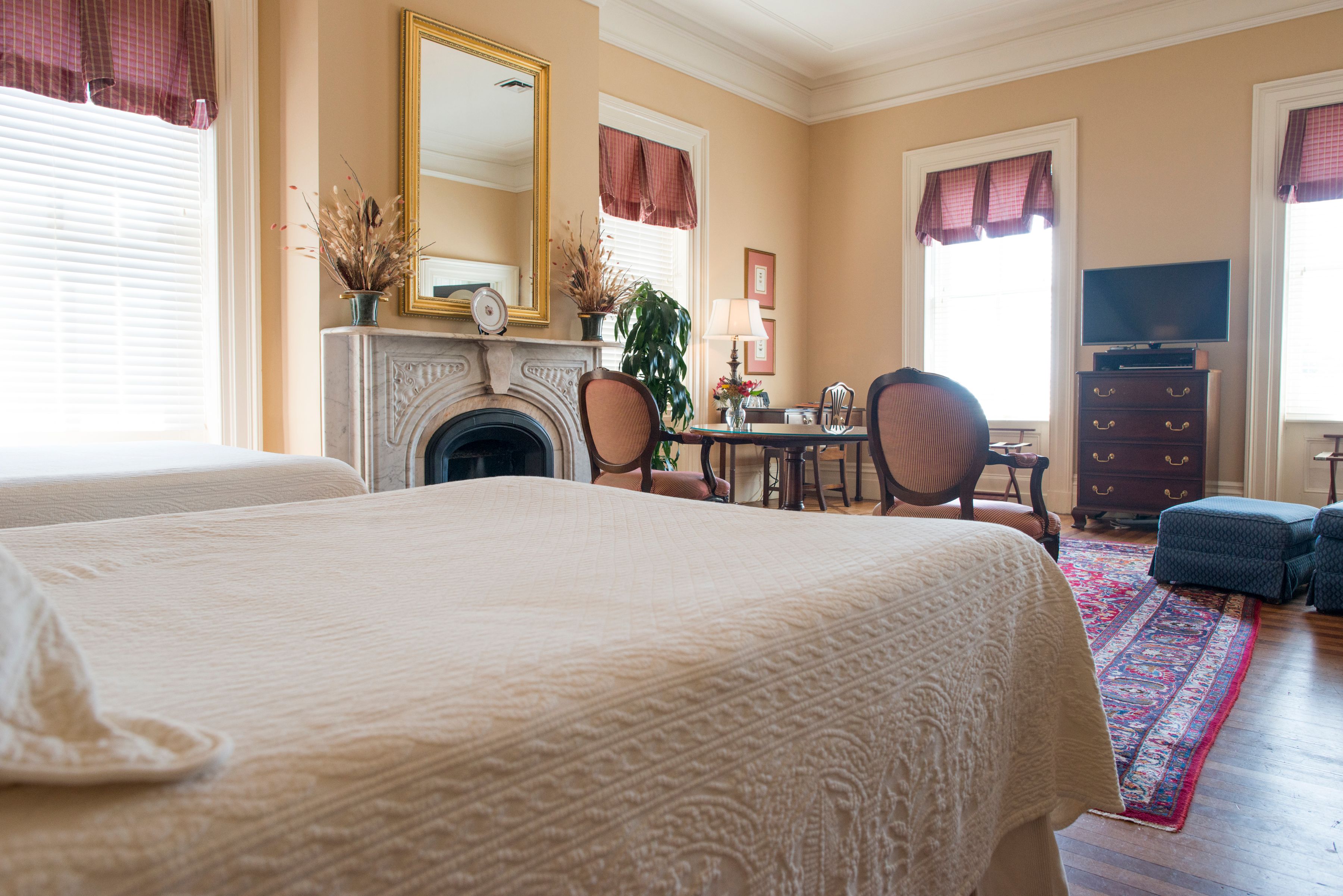
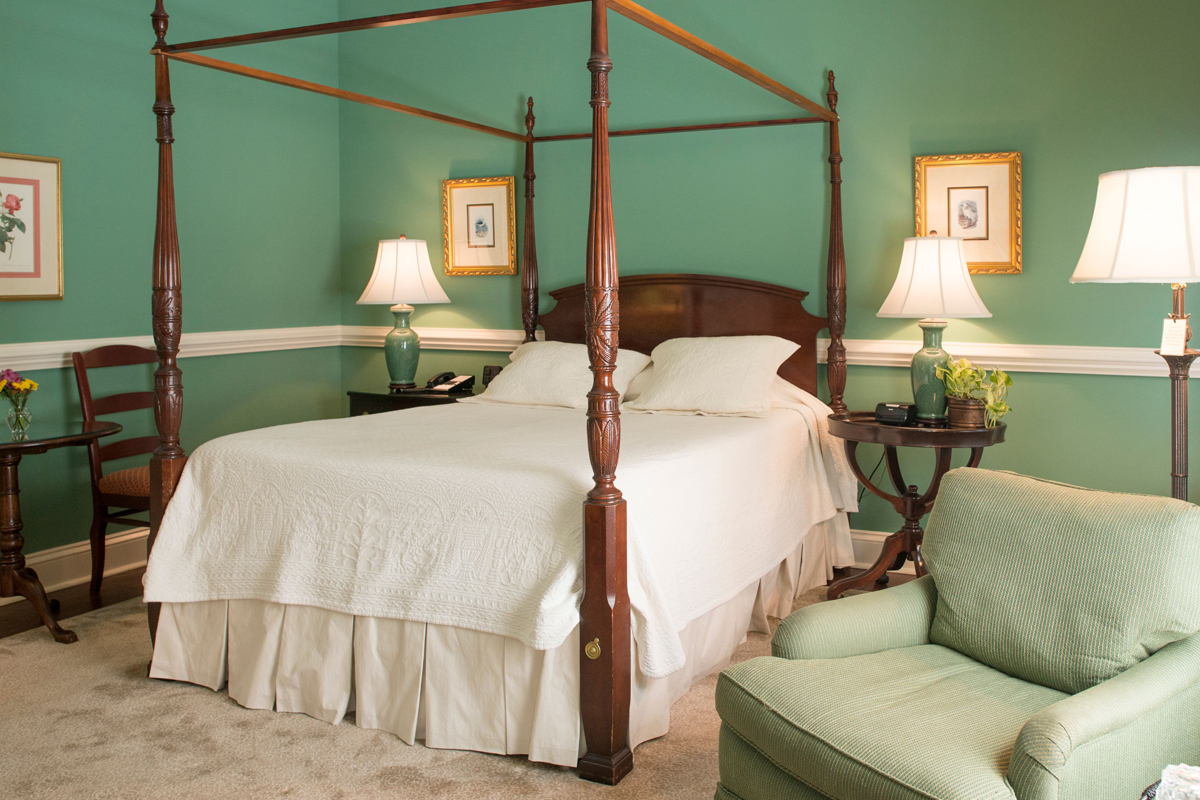
- Revel in the Inn's romantic ambiance and history. Although the bed and breakfast witnessed some notable moments in American history, the statuesque house was originally intended as a wedding gift. Constructed in 1763 for his bride Elizabeth Grimke, the home was made for entertaining, with spaces like a ballroom and a library. Some of these rooms now serve as cozy guestrooms, with reproduction furniture and period antiques that emanate an elegance of a bygone era. Soaring 12-foot ceilings and gas fireplaces crafted out of Italian marble in many of the guestrooms complete the dreamy scene.
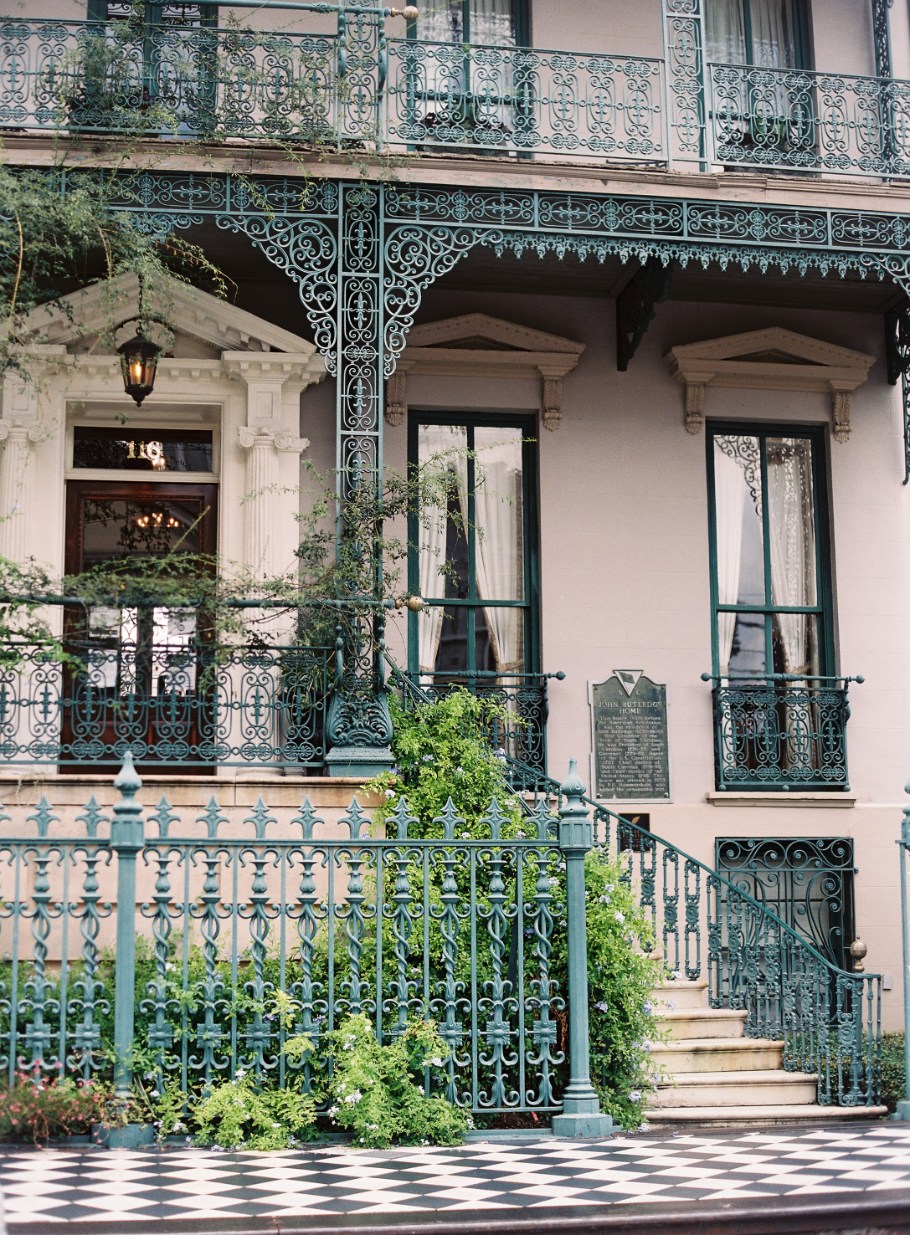
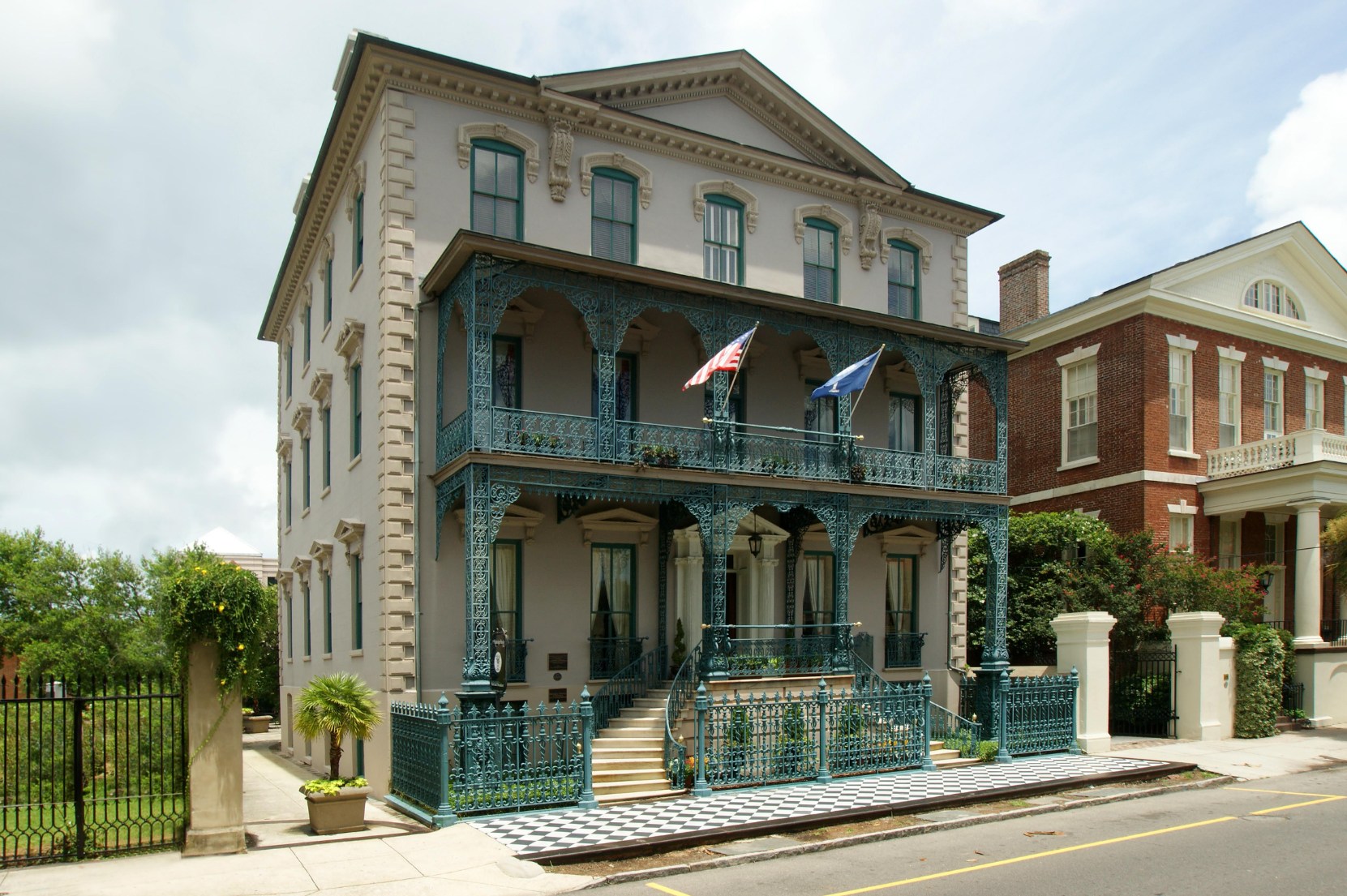
- Admire the Inn's graceful Georgian-style architecture and of-the-period details. From the star-patterned parquet flooring of the grand staircase to the Revolutionary War-era musket balls on display in the Signers Ballroom, which were unearthed during the bed and breakfast's renovation, guests will find historical details around every corner and tucked in each nook and cranny of John Rutledge House Inn. With its intricate wrought-iron balconies, which are dotted with images like palmetto trees and eagles, ornate window lintels, and a dramatic entryway staircase, the Inn's exterior is equally alluring.
Explore
- Explore some of the city’s best museums minutes from the hotel. The Charleston Museum is the oldest museum in the United States, founded in 1773. Home to such artifacts as the table where the state’s secession documents were signed, a whale skeleton, and slave tags, this fascinating museum located just a short drive from John Rutledge House Inn offers valuable context before exploring the city’s historic district. For an eye-opening look at Charleston’s turbulent past, be sure to visit the Old Slave Mart Museum. Just a eight-minute walk from the hotel, this thought-provoking museum was once an open-air market, witnessing the auction of men, women, and children during the mid-1800s. Along with text-heavy exhibits, haunting oral recollections, and artifacts, the museum is also frequently staffed by the descendants of some of the enslaved people of Charleston.
- Take a step back in time and into a piece of American history with a visit to Fort Sumter. Accessible only by ferry, this pentagon-shaped island and one-time Confederate stronghold in Charleston Harbor was the site of the first battle of the Civil War. Though thoroughly shelled by the Union army between 1863 and 1865, some of its original fortifications and weaponry remain. For a more recent look at Charleston’s military history, head across the harbor to Patriots Point Naval & Maritime Museum. Here, visitors can explore the USS Yorktown, a mighty aircraft carrier that served in many battles in the Pacific Theater throughout World War II and Vietnam, and the USS Laffey, the most decorated U.S. destroyer from World War II still in existence, as well as the immersive Vietnam Experience. Other notable sights to see at Patriots Point include military aircraft and the Medal of Honor Museum.
- Go for a stroll down Rainbow Row, a picturesque stretch of 13 prismatic Georgian row houses. Perched along lower East Bay Street like house-shaped Easter eggs, these candy-colored homes were once wharf-side merchant stores. Although the buildings themselves date back to 1730, their pastel paint is slightly more recent, receiving their kaleidoscopic makeovers around the 1920s. The splashy transformation was a raving success, and soon, the rest of the city followed course. Along with those of Rainbow Row and, of course, John Rutledge House Inn, several other historic homes throughout Charleston are also worth a visit. The Aiken-Rhett House offers a snapshot-in-time look at an 1820s urban townhouse complex, complete with dorm-style quarters for its enslaved African caretakers), while the Heyward-Washington House is the former home of one of South Carolina’s signers of the Declaration of Independence and the temporary home-away-from-home for President George Washington during his weeklong Charleston visit in 1791.
- Bear witness to South Carolina’s involvement in one of the most shameful periods of American history and its efforts to reconcile its role during that time with a visit to one of Charleston’s plantations. Although there are several former plantations in the area, one that is especially impactful is the McLeod Plantation Historic Site. A Gullah Geechee heritage site that centers the stories of enslaved people and freedmen, this 37-acre former cotton plantation is a living tribute to the people who shaped the Lowcountry. Here, visitors learn about everything from the cultivation of Sea Island cotton and daily plantation life to the role of spirituality, the influence of the Freedmen’s Bureau, and the efforts of the Massachusetts 55th, a volunteer infantry unit of free Black people who emancipated the plantation’s enslaved individuals.
Experience
- Experience the postcard-perfect streets of Charleston from the charming vantage point of a horse-drawn carriage ride operated by Old South Carriage Co. or Palmetto Carriage Works. With its cobblestone streets, confection-colored buildings, waving palms, and stately trees dripping with Spanish moss, Charleston can only be described as breathtakingly picturesque. Under the well-trained hands of expert tour guides, guests take in sights like Rainbow Row, Cabbage Row, the Aiken-Rhett House, Charleston City Market, White Point Gardens, Colonial Lake, and Waterfront Park. Guests can also rest easy knowing that the horses are well taken care of, with spacious, well-ventilated box stalls, plenty of quality food, and even pasture time at farms in the countryside. Visitors are welcome to visit equine team members at their stables in the city to witness their care firsthand.
- Uncover the contributions, both past and present, of Black Charlestonians by exploring local landmarks along the Gullah Geechee Cultural Heritage Corridor. The Gullah Geechee people are the descendants of enslaved individuals from Central and West Africa, who retain both rich cultural and linguistic traditions with African roots. (Although often used interchangeably, “Gullah” more specifically refers to descendants in North and South Carolina, while “Geechee” is used for those in Georgia and Florida.) Spanning 12,000 square miles, from southern North Carolina to northern Florida, this coastal region is recognized by the U.S. Congress for its cultural and historical importance. Due to their geographic isolation on the Sea Islands in the Atlantic, both during slavery and following Emancipation, the early Gullah people had fewer interactions with Colonial culture. This allowed the Gullah language, sometimes called “Sea Island Creole,” and Central and West African traditions like handicrafts, farming and fishing practices, cooking techniques, folk beliefs, music, and storytelling to flourish. Today, however, due to climate change and real estate development, Gullah Geechee homelands and their way of life are at risk, landing the region on the National Trust for Historic Preservation’s list of most threatened places. Visitors to Charleston can help keep the city’s colorful Gullah culture alive in a number of ways, like embarking on the “Exploring the Gullah Culture” tour at Boone Hall, touring the Sea Islands of James and Johns and other Gullah landmarks, enjoying the Gospel Brunch on Sundays at Halls Chophouse, or taking in a performance of “The Sound of Charleston” concert series.
- Search for a souvenir at the Charleston City Market. A city mainstay since 1804, following its transfer to the city in 1788 by Charles Cotesworth Pinckney for permanent use as a public market, this sprawling marketplace stretches for four city blocks from Meeting Street to the Cooper River. Today the market is home to over 300 entrepreneurs. Shoppers can explore both the circa-1841, Greek Revival-style Market Hall and three “sheds,” open-air structures that have stood the test of time, weathering earthquakes, tornadoes, and Civil War cannon bombardments. When searching for that special something, keep an eye out for the “Certified Authentic: Handmade in Charleston” symbol to take home a local product. One such good, the sweetgrass basket, is rich in Charleston history with roots in African culture. Woven by Gullah artisans out of bulrush, locally harvested from the sandy soil of the Lowcountry, these stunning handicrafts were once used to the rice seed from its chaff. The history and craftsmanship of sweetgrass basketry is so prized that one by Charleston weaver Mary Jackson even resides in the permanent collection of the Smithsonian American Art Museum.
- Revel in Charleston’s role as an early jazz incubator. Although jazz music was born in New Orleans, the product of the mingling of African and Creole cultures, the style was further finessed in other areas like New York City’s Harlem, the South Side of Chicago, and Beale Street in Memphis. In Charleston, the jazz scene, much like many other aspects of the city’s culture, took significant inspiration from the Gullah community. Here, the tribal rhythms brought over by enslaved African drummers combined with the beats of Black drummers attached to white militias and community brass bands to create Charleston jazz. In fact, the workday tunes and Geechee dances of Charleston’s dock workers eventually inspired the creation of “The Charleston” by Cecil Mack and James P. Johnson. The accompanying dance craze of the Roaring 20s also had African roots, descending from the Juba dance introduced to South Carolina by enslaved people from the Kingdom of Kongo. Today, jazz lovers in Charleston can enjoy this uniquely American music style at places like the yearly Charleston Jazz Festival, the Charleston Jazz Academy, and the Forte Jazz Lounge, as well as during performances by the Charleston Jazz Orchestra at the Charleston Music Hall.
Taste
- Enjoy a taste of true Southern hospitality with complimentary breakfast, afternoon tea and evening cordials at John Rutledge House Inn. In the mornings, travelers can greet the day with made-to-order dishes and daily specials from the comfort of their guestroom, amid the history of the Signer's Ballroom, in the courtyard, or on the piazza. In the afternoons, meanwhile, perfectly brewed teas, thirst-quenching lemonades, and a selection of light bites offer a welcome reprieve from the Charleston sunshine. Then, after a long day exploring Charleston, unwind with an indulgent nightcap of port, sherry, or brandy.
- Sample the bounty of the Atlantic Coast by diving into one of South Carolina’s many delectable seafood dishes. One seafood staple is she-crab soup, a decadently creamy dish with roots in Scotch-Irish culinary traditions that was first served at the historic Rutledge House. The dish was born during a dinner for President William Howard Taft at the home of Charleston Mayor R. Goodwyn Rhett, now the John Rutledge House Inn. Rhett's chef and butler, William Deas, put the “she” in she-crab soup by adding a cluster of crab roe, elevating the dish from ordinary to extraordinary. Not a dish but an entire dining experience, oyster roasts are a popular culinary pastime in the Lowcountry, particularly in the wintertime. During the season, these shellfish feasts take over backyards, beaches, and church parking lots. (Contrary to the name, the oysters are steamed beneath wet burlap on a plate-topped wood fire, not roasted.) Accouterments like lemon wedges, cocktail sauce, hot sauce, crackers, and plenty of napkins are provided. Those hoping for a complete ocean-to-table adventure can even arrange a crabbing expedition through Charleston local Tia Clark, an Airbnb Experience named one of the best in the world. Throughout this culinary journey, guests get their hands dirty by throwing out the net and even baiting fish. Afterward, guests can take their catch to the Charleston Crab House, a local restaurant that will happily cook the crabs to perfection.
- Savor the culinary heritage of the Gullah Geechee people and the South by dining on some traditional South Carolina dishes. Southern cuisine is deeply intertwined with African culture, from the time when enslaved people stirred the pots and cooked the meals in plantations across the American South, fusing Central and West African cooking styles with local ingredients. Gullah Geechee food, in particular, focuses on seafood and seasonality. Must-have dishes include okra soup, a gumbo-like Gullah staple with a tomato base in place of a roux, and Charleston red rice, a Lowcountry classic with tomato paste and bacon similar to West African jollof rice. Shrimp and grits, South Carolina’s official state food, is another Southern favorite with African roots. Although the Gullah people descended from what is a rice culture, they were introduced to corn and grits during mealtime on the plantations, combining it with the shrimp they caught on the Sea Islands. Enjoy a bowl of shrimp and grits and other Gullah soul food at Charleston eateries like Hannibal’s Kitchen, James Beard Foundation-recognized Bertha’s Kitchen, and My Three Sons of Charleston.
- Drink in South Carolina’s spirited heritage with a stop at one of Charleston’s local distilleries, breweries, or taprooms. In the state’s early days, settlers would imbibe in glasses of Madeira wine brought over by sailing ships, picked up in casks at the Portuguese port before setting off across the Atlantic, or swigs of rum from Barbados, a popular last stop for European settlers before dropping anchor in Charleston. Although those libations are still popular around the city, today's locally made drinks tend to be heavy on grains, like malty, hoppy craft brews, boozy bourbons and rye whiskeys, and potent moonshine in flavors like peach, coconut cake, and banana pudding. Meanwhile, vodkas get a Southern makeover, too, infused with the taste of sweet tea, lemonade, and the Carolina Reaper pepper.
FEATURED ACCOMMODATIONS
Featured Offers
Friends of Historic Hotels of America receive up to 10% off the Best Available Rate using the code NHP.