
History
Discover French Lick Springs Hotel, which was named after the mineral springs in French Lick and the water bottled and sold as Pluto Water.
Legends circulated for centuries about the medicinal qualities of French Lick’s the mineral springs. Many European Americans sought out their healing properties when they began settling the area during the early 19th century. One person in particular—Dr. William A. Bowles—decided to establish a hotel near one of the mineral springs that could serve as a luxurious health center. In 1845, Bowles purchased a three-story wooden-framed building that he named the “French Lick Springs Hotel.” The doctor grew this wonderful holiday destination over the next few centuries, expanding the building to feature a wonderful array of Gothic Revival-style architecture. He successfully advertised the services of its mineral spring to countless travelers, calling the reservoir “Pluto’s Well.” Yet, most of Bowles’ original hotel was destroyed by a fire in 1897.
Several years later in 1901, Indianapolis politician Thomas Taggart and a group of investors purchased what remained of Bowles’ building. Intending to transform the location into a prestigious “resort hotel,” the men completely reconstructed the French Lick Springs Hotel at a cost of more than $200,000. Taggart became sole owner in 1905 and continued the extensive renovation project alone. The French Lick Springs Hotel expanded exponentially under his stewardship, growing from a single structure to a complex consisting of around a dozen facilities. The main building itself was joined by four other wings between 1901 and 1925. He successfully continued to market the medicinal properties of the nearby spring water, selling it on masse as “Pluto Water.” This beverage was bottled and shipped at the French Lick Springs Hotel with the slogan: “If Nature Won’t, Pluto Will.”
The French Lick Springs Hotel subsequently became one of the nation’s leading resorts. Within a matter of years, many of the nation’s most famous luminaries began vacationing at the location, including Lana Turner, Bing Crosby, and Louis Armstrong. Several legendary golfers chased after national titles on The Hill Course, with greats like Walter Hagen and Jim Barnes fiercely competing against each other regularly. French Lick Springs Hotel hosted many statesmen, too, such as the renowned American general, Douglas MacArthur. A few U.S. Presidents have even visited at one point or another, like Harry S. Truman and Ronald Reagan. This outstanding historic location has also held several important events, including the Democratic Governor’s Convention of 1931. It was here that future president Franklin Delano Roosevelt successfully gathered support for the presidential nomination at the Democratic National Convention nearly a year later.
Following the Great Depression, the French Lick Springs Hotel struggled to maintain its earlier prestige. Thomas Taggart’s son—also named Thomas—eventually sold the resort to the Sheraton Corporation in 1955. Despite the attempts of various owners to restore the French Lick Springs Hotel to its former glory, the once esteemed location continued to languish for some time. What followed next was an era of stagnation that lasted well into the 1980s. Yet, not all was bad for the French Lick Springs Hotel. It still hosted various national events of great prestige, and was notably the site of two championship competitions for the Ladies Professional Golf Association in 1959 and 1960, respectively.
This period of decline fortunately came to an end when Luther James and his family purchased the entire resort in 1991. They subsequently invested millions into restoring the French Lick Springs Hotel back to its original historic grandeur. Their attempt to save the resort continued on for many years, even after they sold the location in 1997. Bill and Gayle Cook now carry on the work started by the James family. Since they acquired the French Lick Springs Hotel in 2005, the Cooks have tirelessly endeavored to bring the resort back into the national spotlight. Combining it with the rival West Baden Springs Hotel and the new French Lick Casino, the French Lick Springs Hotel is currently part of the spectacular French Lick Springs Resort. Thanks in large part to the Cooks, French Lick Springs Hotel is once again among the nation’s most preeminent holiday destinations. A member of Historic Hotels of America, few locations today possess such similar history or pedigree.
Hotel Timeline
The Location
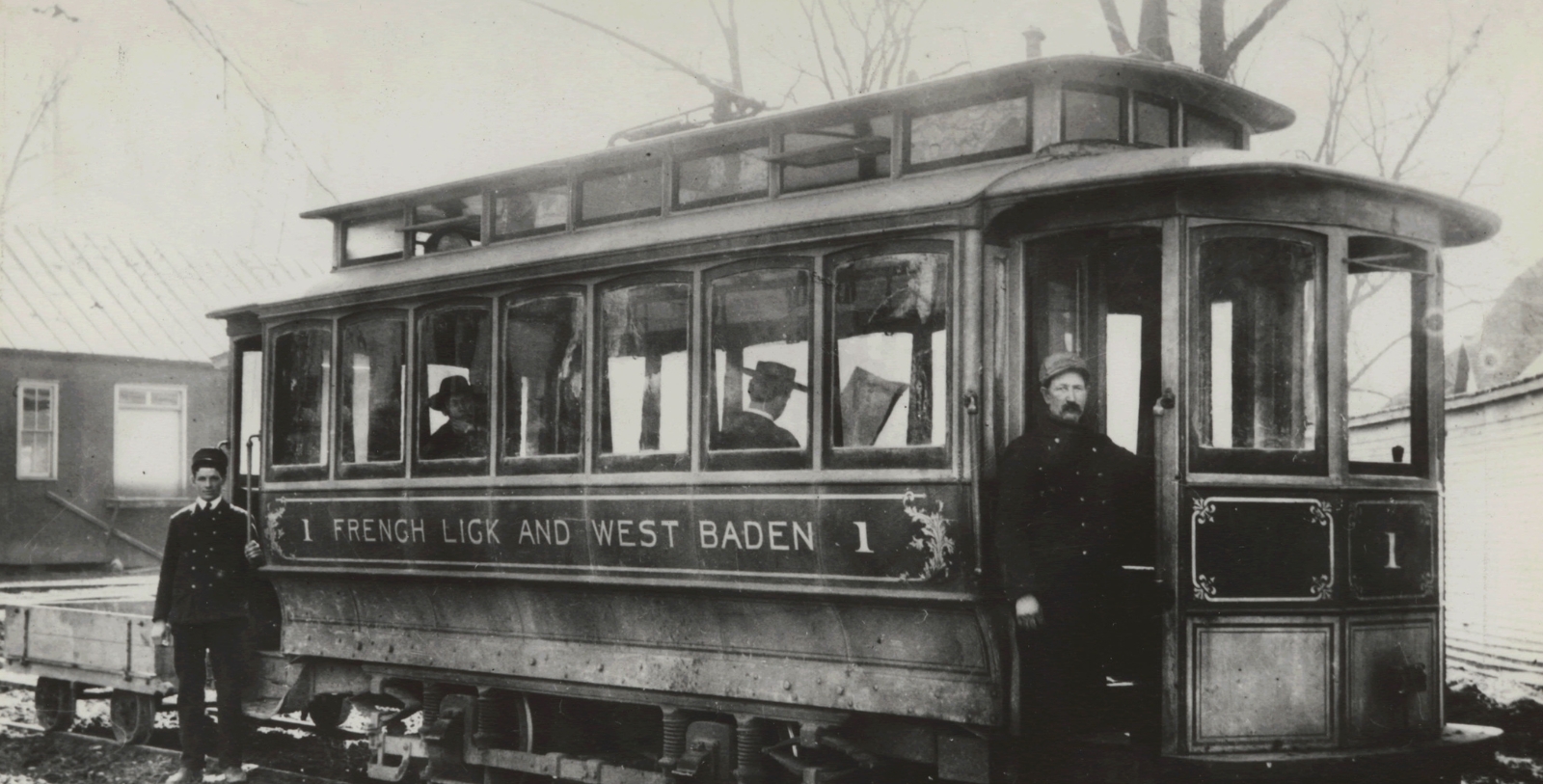
French Lick Springs Hotel is named after the town of French Lick, which Americans have regarded as a luxurious holiday destination for centuries. Settlers arriving in the surrounding valley during the early 1800s discovered a series of soothing sulfur springs that many believed to possess medicinal properties. It did not take long for some of those people to commercialize the springs as a vacation retreat for mentally weary and physically ailing travelers. A vibrant community gradually developed around the location, which formed the nucleus of modern-day French Lick. The town continued to grow in popularity to the point where the Chicago, Indianapolis, and Louisville Railway built an exclusive passenger line known as the “Monon Railroad.” French Lick quickly arose as a renowned resort town as thousands of people traveled to the area for its supposed healing qualities. By the end of the 19th century, this reputation had even elevated French Lick into one of the epicenters for the era’s contemporary health movement. French Lick’s popularity continued unabated among American travelers during the first few decades of the 20th century. Many of the nation’s most illustrious citizens frequently made trips out to French Lick, including the likes of actor John Barrymore, composer Irving Berlin, and gangster Al Capone.
The area’s main resort hotels soon became central to the emerging culture of America’s Jazz Age, with exciting dance parties seemingly happening every weekend. But some of this luster disappeared when the Great Depression hit in 1929, as many of the resort businesses throughout the region struggled to attract the same numbers of guests. It took decades for French Lick and the other surrounding communities to return to their former glory as prestigious vacation retreats. Over the course of the 20th century, the entire area continued to emerge as one of the most fantastic places to vacation in the whole United States. It was during this development that the town’s most famous resident was born—legendary basketball star Larry J. Bird. Bird spent his infancy in neighboring West Baden Springs but moved south to French Lick during his adolescence. He would later go on to have a historic career playing for the Boston Celtics, becoming the only person in the National Basketball Association (NBA) to win the following awards: Rookie of the Year, Most Valuable Player, NBA Finals MVP, and All-Star MVP, as well as Coach of the Year and Executive of the Year. Larry Bird also won three NBA championships while playing for Boston, earning the coveted title in 1981, 1984, and 1986. Inducted into the Basketball Hall of Fame in 1998, Bird today is regarded as one of the sport’s most prolific figures.
The Architecture
The very first iteration of the French Lick Springs Hotel that emerged in the 1840s was a wooden-framed structure built upon an L-shaped foundation. Dr. William Bowles—who originally acquired the building in 1845—greatly enlarged the hotel to feature three stories, a wrap-around veranda, and a brilliant multi-gabled roof. The whole structure displayed a fascinating blend of Gothic Revival-style architecture that went largely unchanged for the remainder of the century. William Bowles also owned several hundred acres surrounding the French Lick Springs Hotel, but he sold most of it to Dr. John A. Lane in 1852. Bowles and his general manager, Dr. Samuel Ryan, used the building to encourage visitation to the many mineral springs located on-site. Their success in advertising the medicinal qualities of the spring water enabled Bowles to renovate the structure in the first place. The hotel subsequently underwent additional renovations under different owners following Bowles’ death in 1873.
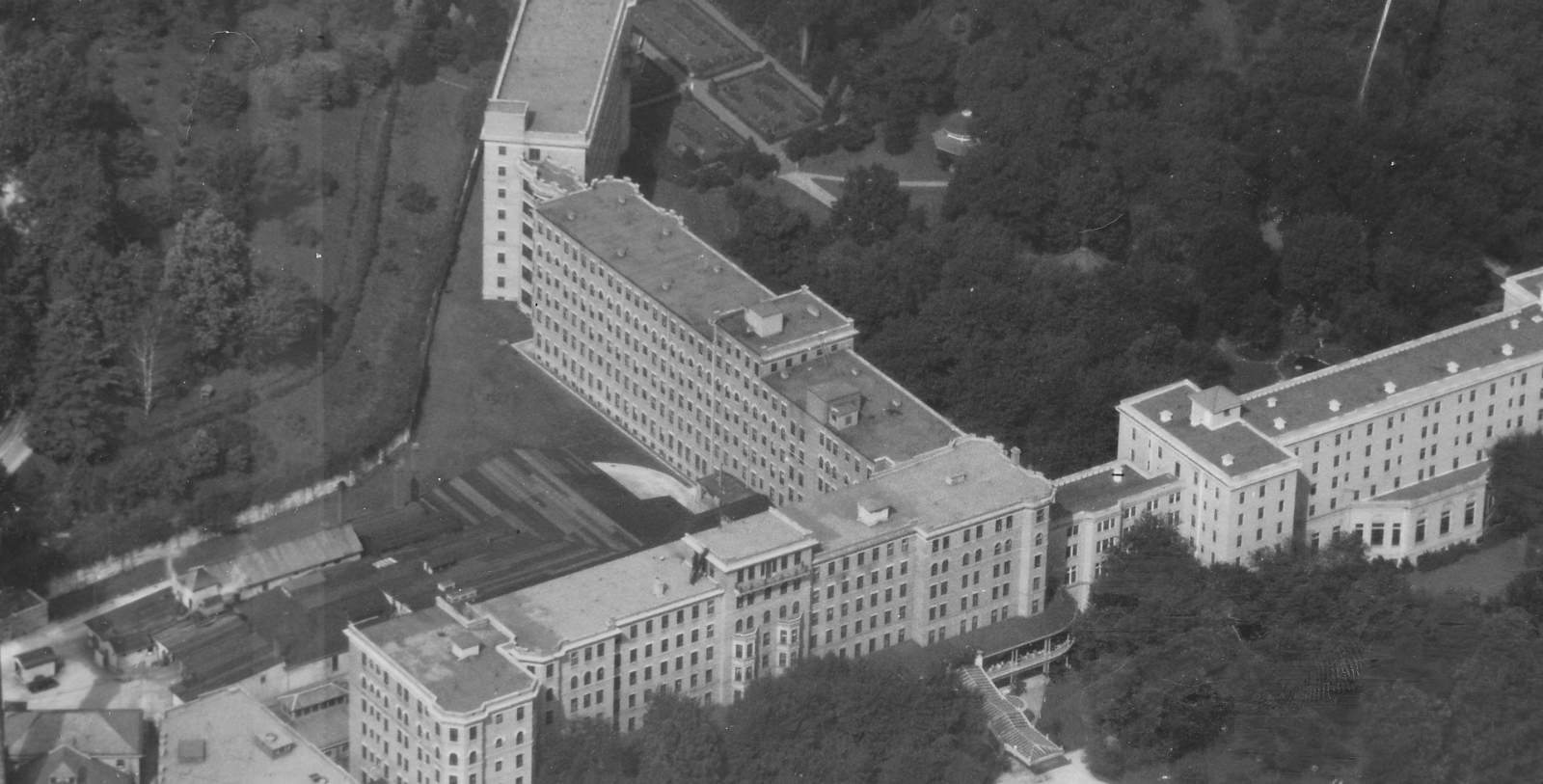
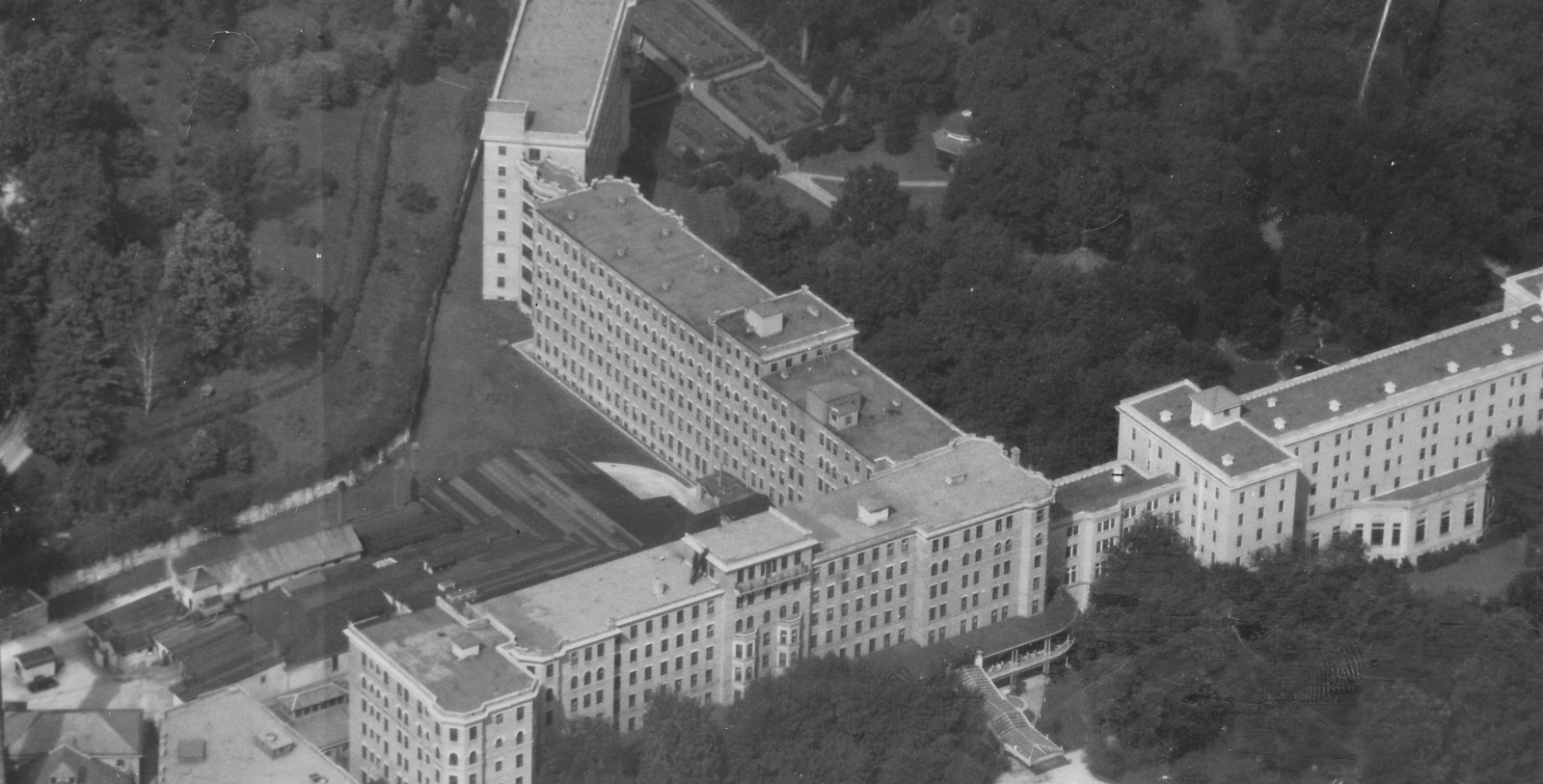
The original building burned down in 1897 when a fire spread throughout the grounds. While its owners at the time managed to reconstruct the destination, the French Lick Springs Hotel did not assume its current appearance until Thomas Taggart purchased it in 1901. Taggart and the group of investors he brought onto the project spent more than $200,000 completely renovating the location. Much of their initial work focused on the “main building,” which is often referred to as the “east wing.” Designed by architect William Homer Floyd, the main building displayed a beautiful blend of Late Victorian architecture that was later overlaid with Italian Renaissance-style design aesthetics. It stood six stories tall and featured some of the finest buff-colored brickwork in the region. A stunning white veranda stretched along the structure’s exterior, constructed with wood atop a solid limestone foundation. Guests could enter into the main building by means of a gorgeous two-story staircase, where upon entry they would encounter a magnificent interior lobby. The space was divided into two rooms connected by a wall with several open squared arches. Many pillars proliferated throughout the area, which formed a one-story colonnade that featured a white ceiling and gorgeous cross beams.
Taggart continued with the renovations well after he became the sole owner of the French Lick Springs Hotel, constructing the following four structures from 1905 to 1925: the annex, the west wing, the deluxe wing, and the north wing. These spaces contained the most cutting-edge shops and accommodations of their day. Taggart added several other luxurious facilities throughout the resort as well, including the Pluto Spring House, a kitchen complex, a power station, and a recreation center (formerly the bathhouse). The French Lick Springs Hotel also featured its own bottling plant, which Taggart used to mass produce his patented “Pluto Water.” He even added a marvelous interior pavilion into the west wing, which he dubbed the “Pluto Bar.” This outstanding venue displayed some of the most beautiful Italian Renaissance Revival-style architecture ever found inside an American building.
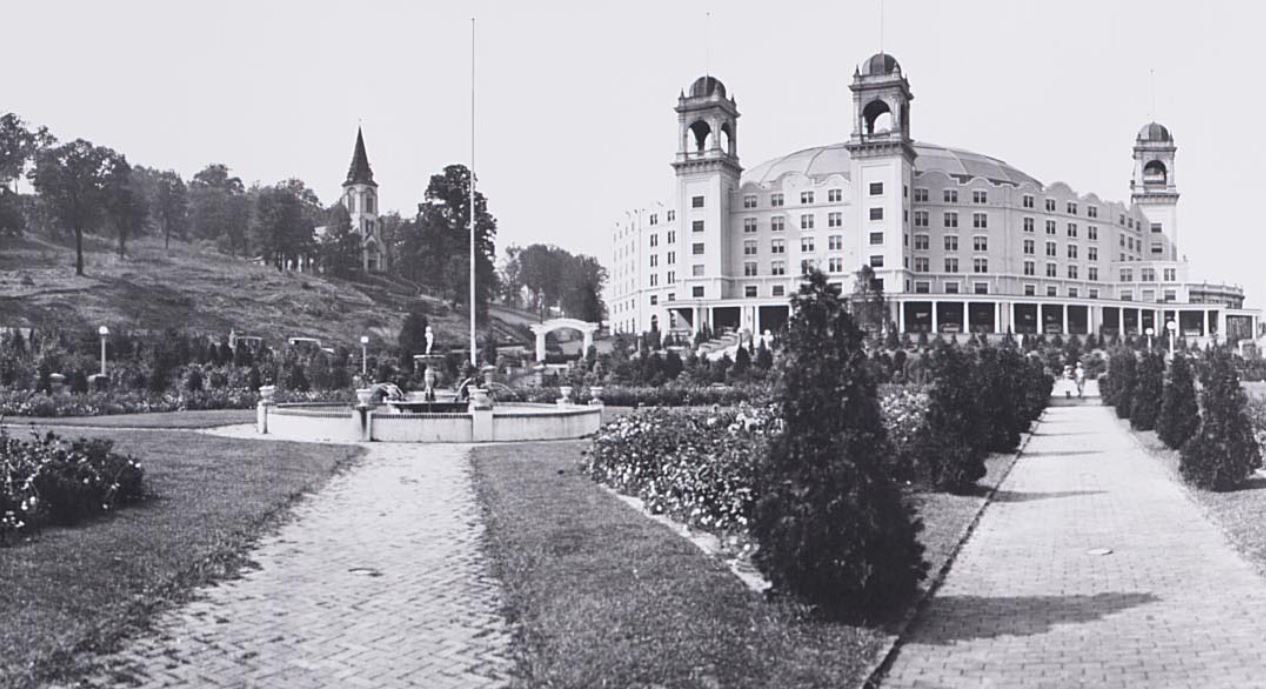
As the resort buildings underwent their dramatic renovation, so too did the gardens reside throughout the grounds. Taggart hired landscape architects to develop three gardens that could properly reflect the inherent beauty of the new French Lick Springs Hotel. As such, they created a Japanese garden, a Fresh Water Garden, and an Italian-style formal garden. The most enduring of these locations is the traditional Japanese garden. Traditional Japanese gardens are a small representation of a peaceful landscape, punctuated with a tranquil water feature. This eclectic element rendered the garden a perfect setting for an outdoor cocktail hour, reception or wedding. Tour the grounds at French Lick Resort to pay homage to Taggart’s legacy of horticulture which is stewarded today through the formal gardens and greenhouse.
French Lick Springs Hotel subsequently experienced a series of renovations that constantly transformed the resort’s appearance over the next several decades. The most recent of these projects fortunately provided a breath of fresh air into the century-old structure. Bill and Gayle are now the stewards of this ongoing restoration work that first started all the way back in 1991. Among the greatest structural elements installed by the Cooks are the Baroque-style murals in the main building’s lobby. In keeping with the area's fame for producing mineral-laced “Pluto Water” 100 years ago, they depict the mythological story of Pluto's World. A single mural over the main lobby shows Orpheus and Eurydice—symbols of love—in a springtime setting. This is the story of Pluto’s world, as told through a breathtaking mural containing six separate panels. A group of artists from Conrad Schmitt Studios invested 1,500 hours in the planning and creation of these mural panels. In the process, Pluto’s world came to life.
Famous Historic Events
Democratic Governors’ Convention (1931). The origins of the resort’s involvement with the Democratic Governors’ Convention can be traced back to the legendary Thomas Taggart. A former mayor of Indianapolis who briefly served as a U.S. Senator in 1916, Taggart had established himself as one of the nation’s leading Democrats during the early 20th century. His involvement with the party at the national level even earned him the appointment as Chairman of the Democratic National Committee. Democratic politicians frequently stopped by the French Lick Springs Hotel as such, holding various campaign rallies and fundraisers alongside Taggart. The resort soon became known throughout the country as the unofficial national headquarters for the Democratic Party. The French Lick Springs Hotel maintained its esteemed status among the country’s top Democrats, even after Taggart’s death in 1929. Perhaps the greatest testimony to this lasting prestige was when the French Lick Springs Hotel hosted the Democratic Governors’ Convention some two years later. Among the attendees was presidential hopeful Franklin Delano Roosevelt, who was then the acting Governor of New York. Roosevelt managed to parlay the meeting into an opportunity to bolster support for his upcoming bid for the White House. The backing he received proved crucial, as it gave him the momentum necessary to win the eventual nomination at the Democratic National Convention in 1932.
Famous Historic Guests
- John Barrymore, renowned actor known for his roles in Grand Hotel, Twentieth Century, and Midnight.
- Lana Turner, celebrated actress known for her roles in The Postman Always Rings Twice, Peyton Place, and The Bad and the Beautiful.
- Bing Crosby, world-famous singer and actor known for his roles in Going My Way and The Bells of St. Mary’s.
- Duke Ellington, legendary jazz musician whose orchestra famously played at the Cotton Club.
- Louis Armstrong, renowned jazz musician regarded as one of the most influential figures in the genre.
- Irving Berlin, celebrated composer who wrote such songs as “Anything You Can Do (I Can Do Better),” “White Christmas,” and “There’s No Business-Like Show Business.”
- Bob Hope, famed comedian and patron of the United Service Organization (USO).
- Bud Abbott and Lou Costello, comedians best known for their comedy routine, “Who’s on First?”
- Hoagy Carmichael, famous songwriter known for such pieces as “Georgia on My Mind,” and “Heart and Soul.”
- Joe Louis, world boxing heavyweight champion considered to be among the greatest boxers of all time.
- Howard Hughes, business magnate and pilot best known for creating the Hughes Aircraft Company in 1932.
- Douglas MacArthur, American General remembered for his campaigns in the Philippines during World War II as well as the Korean Peninsula.
- Franklin Delano Roosevelt, 32nd President of the United States (1933 – 1945).
- Harry S, Truman, 33rd President of the United States (1945 – 1953).
- Richard Nixon, 37th President of the United States (1969 – 1974).
- Ronald Reagan, 40th President of the United States (1981 – 1989).
Guest Historian Series
The first hotel on this site was built in 1845 by Dr. William Bowles as a health resort to take advantage of the natural sulphur springs and mineral water. The original hotel burned down in 1897 but was rebuilt on a grander scale by Thomas Taggart, the mayor of Indianapolis (and later a U.S. Senator). The Monon Railroad built a spur directly to the hotel grounds with daily passenger service to Chicago.
Casino gambling, although illegal, flourished at the resort. In its heyday in the Roaring Twenties, the surrounding Spring Valley had 30 hotels and 15 clubs. At the time, it was a lively community for gamblers, politicians, sport figures, entertainers, and gangsters. The town got its name from the French traders who founded it and the salty mineral deposits that attracted wildlife. During the Prohibition years, French Lick had 13 casinos, all of them illegal. Famous guests who visited French Lick included Franklin D. Roosevelt, Harry S. Truman, Adlai E. Stevenson, the Marx Brothers, Joe Louis, Bob Hope, Bing Crosby, Douglas MacArthur, Bud Abbott, and Lou Costello.
Continue Reading