The Capital Hilton
History
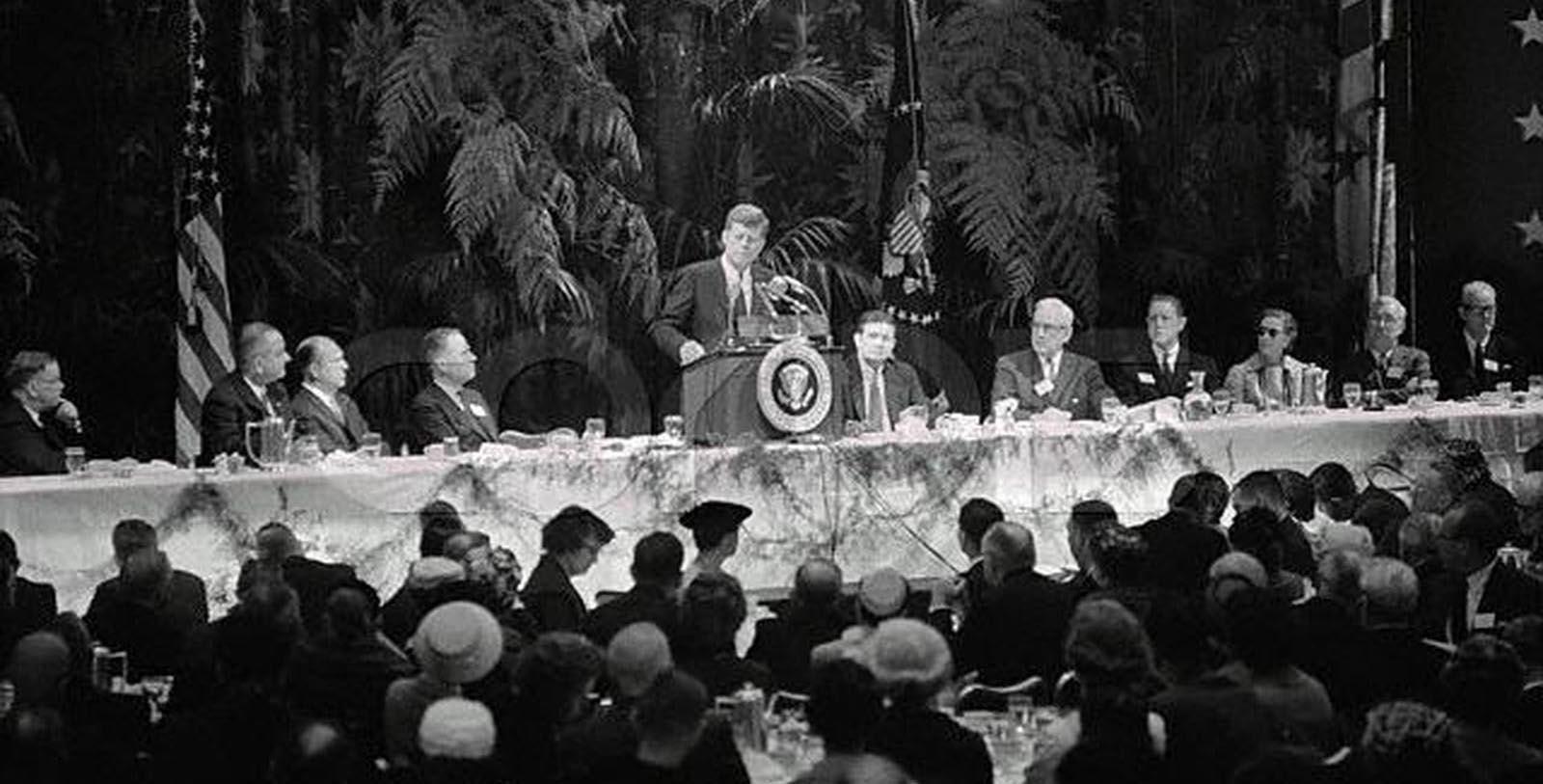
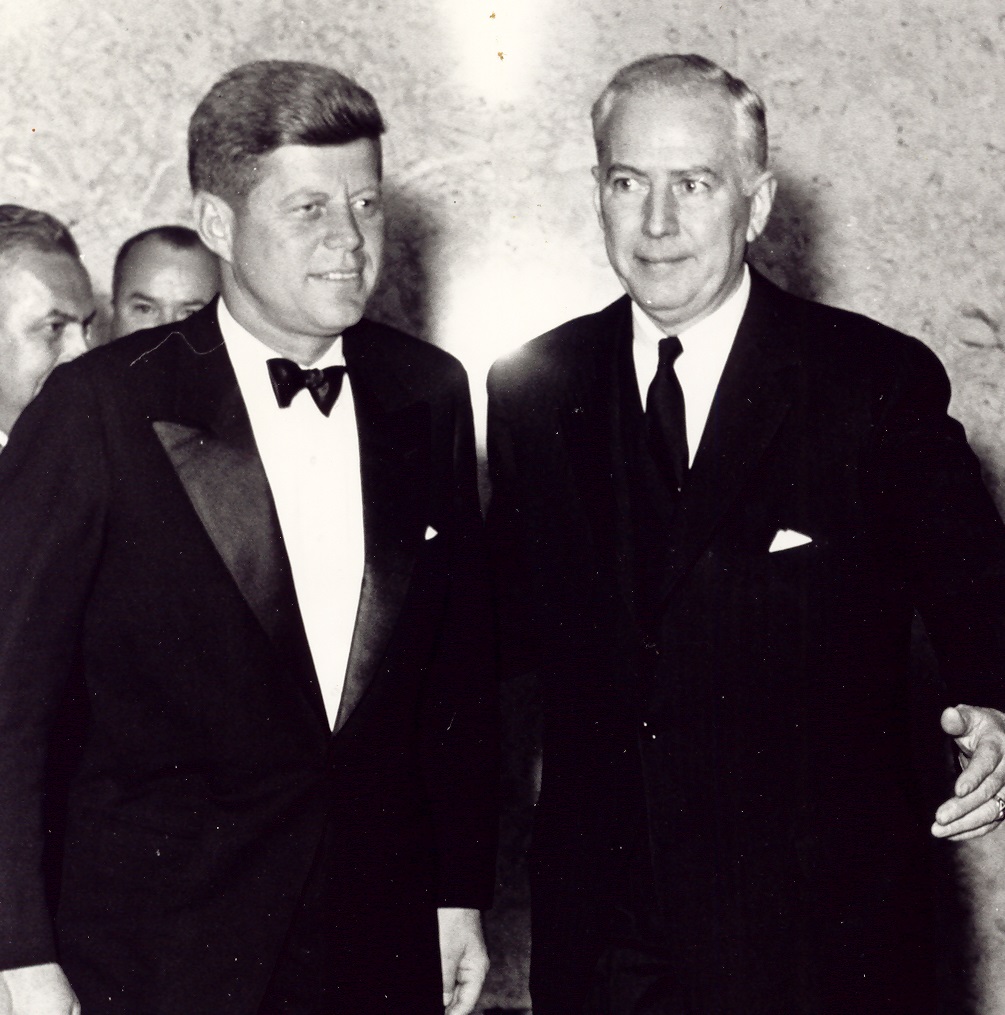
Discover The Capital Hilton, which has hosted Inaugural Balls, presidential interviews, and presidential visits from every President since FDR.
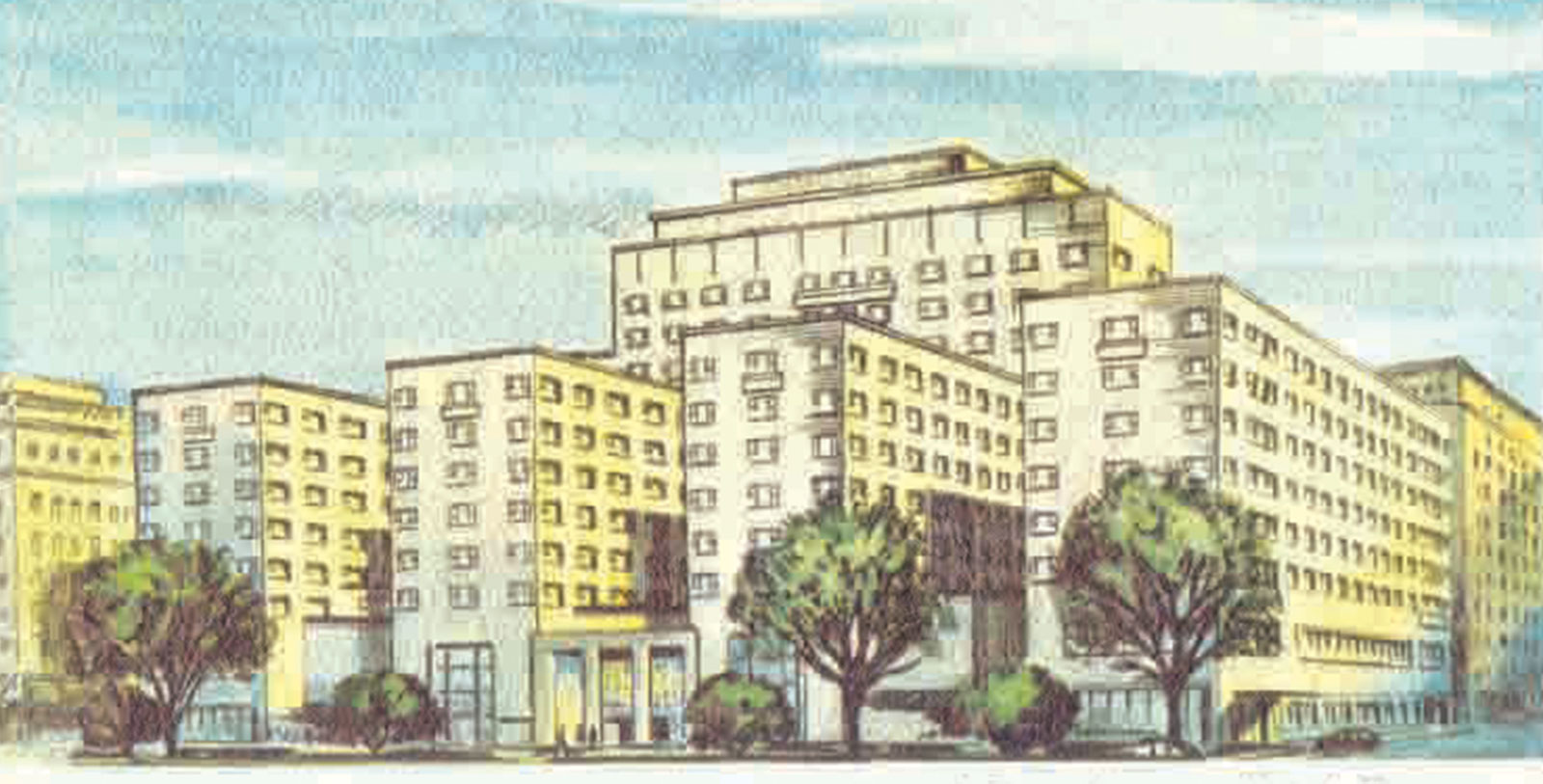
A member of Historic Hotels of America since 2014, The Capital Hilton stands today as one of Washington’s most celebrated hotels. Since its inception, it has played host to a wealth of prominent gatherings that have helped cement its identity as one of Washington D.C.’s most notable hotels. Presidents, dignitaries, and celebrities have graced The Capital Hilton with their presence, beckoning guests to delight in its esteemed accommodations. But The Capital Hilton was actually first known to its guests as the “Hotel Statler” when it first debuted nearly a century ago. Construction on this magnificent historic hotel began shortly before the outbreak of World War II at the behest of the Statler Hotels corporation. The architectural firm Holabird & Root oversaw the project, which took more than three years to complete. Holabird & Root managed to create a spectacular hotel, designed with some of the finest Mid-century Modern architecture in all of Washington. When the business finally opened its doors on January 18, 1943, it immediately became one of the city’s most exclusive destinations. Travelers specifically marveled at its state-of-the-art features, such as its central air-conditioning, Zeon tube lighting, and a brand-new copy of USA Today that was delivered on-site each week. The Statler Hotel’s luxury quickly attracted many illustrious people, too, including respected celebrities and politicians. Among the most famous individuals to visit the hotel at the time included Lucille Ball, Fred Astaire, Judy Garland, and Mickey Rooney. Great foreign dignitaries also arrived at the hotel, such as former British Prime Minister Winston Churchill and even the future Queen Elizabeth II. Even the great civil rights leader Martin Luther King, Jr. even stayed following his iconic “I Have a Dream” speech. U.S. Presidents in particular have carried an especially close affinity for the hotel, as well. Since the presidency of Franklin D. Roosevelt, each United States President has made a point to come to The Capital Hilton. In fact, the hotel even opened a “Presidential Holding Room” in order for the for the President to engage in private conversations. Now known as The Capital Hilton, this fantastic historic hotel continues to rank as one of Washington’s best holiday destinations.
Hotel Timeline
The Location
The Capital Hilton is located within the renowned Sixteenth Street Historic District, one of the most active areas in all of Washington, D.C. While the area today is among the city’ most traveled, it went largely uninhabited for many years following its initial development in the 1790s. Sixteenth Street was specifically a key component to Pierre Charles L’Enfant’s vision for Washington, in which it would serve as an important thoroughfare that would divert traffic from today’s Florida Avenue to the White House. Nevertheless, L’Enfant’s plan did not come to pass, as the road mainly consisted of a wide, dirt path until the outbreak of the American Civil War. Buildings remained sparse as well, with just a handful of structures lining its streets. Perhaps the greatest edifice developed at the time was the beautiful St. John’s Episcopal Church, whose architect—Benjamin Henry Latrobe—had worked on the U.S. Capitol Building nearby. Sixteenth Street’s fortunes changed dramatically in the latter-half of the 19th century, when it became a popular neighborhood for the residences of many powerful politicians and dignitaries. Among the most prominent individuals to construct a residency along the street were U.S. Senators, including George H. Pendleton and J. Donald Cameron. Henry Adams—the renowned diplomat and son of President John Quincy Adams—had a house in the area, as did President Abraham Lincoln’s personal secretary, John Hay. The founder of the Washington Post, Stilson Hutchins, also lived in the vicinity of Sixteenth Street, while Alexander Graham Bell rented commercial space for his “Bell Experimental School.” Even Vice President James S. Sherman called the locale home after he moved into a gorgeous manor in 1883. Sixteenth Street has since retained its prestigious reputation, as it is filled with many outstanding restaurants, storefronts, and office spaces.
The hotel is also just a few blocks away from the illustrious Lafayette Square Historic District. Anchored by the eponymous Lafayette Square, this famous neighborhood is home to such historical landmarks like the Blair House, the Decatur House, and the Eisenhower Executive Office Building. Lafayette Square is just a short walk from additional iconic locations, too, like the White House, The Ellipse, and the National Mall. In the words of the U.S. Department of the Interior: “Its statues remind visitors of the struggle to achieve a popular form of government, and it has often been a meeting place for those wishing to bring important issues to the immediate attention of the Chief Executive.” The destination first came into existence at the start of the 1800s, when laborers began developing the District of Columbia based on the plans of Pierre Charles L’Enfant. Originally destined to serve as an exclusive pleasure garden called “President’s Park,” Thomas Jefferson eventually authorized its construction as a public park to be enjoyed by everyone. But construction did not fully commence until after the Marquis de Lafayette’s visit in 1824. (American politicians later named the area after the French diplomat, settling on the title “Lafayette Square.”) But the first actual landscaping took place some three decades later, when prominent architect Andrew Jackson Downing sculpted the nucleus of its current appearance. Amazingly, Downing’s layout has remained mostly the same, with just minor alterations transpiring in the 1870s, 1930s, and 1960s. Lafayette Square today is among the city’s most noteworthy destinations, as it hosts thousands of visitors from all over the world every year.
The Architecture
The Capital Hilton features an amazing blend of Mid-Century Modern architecture. An offshoot of the earlier International and Bauhaus movements, Mid-Century Modern essentially sought to portray a seemingly contemporary, futuristic aesthetic that reflected the popular concepts of civil progress. Professional architects mainly utilized the style from the 1930s to the 1960s, when American society was rapidly undergoing huge transformations—both social and technological. It seemed to many at the time that the country’s way of life was truly on an upward path of mobility. Architects, thus, embraced the design ideals of function, simplicity, and rationality in order to create sleek-looking structures that possessed a communal purpose. As such, Mid-Century Modern designs made explicit use of vertical, flat lines and irregular rectangular shapes so to convey a lack of formality. Overt ornamentation was abandoned, too, as monochromatic brickwork, steel, and concrete served as the essential building blocks for the exterior. Inside, most of the rooms were subdivided into split levels, giving a sense that the structure had undergone a significant change in elevation. Modernist buildings also featured wide, open spaces filled with natural light that represented practicality and comfort. Large widows often served as the primary way in which the architects achieved such a feature. The introduction of spacious windows even sought to better incorporate nature into the overall design, making the surrounding landscape seem as if it were part of the building itself.
Famous Historic Guests
- Lucille Ball, actress best known for her roles as Lucie Ricardo in the hit television show, I Love Lucy.
- Fred Astaire, dancer and actor known for his roles in such films like Top Hat, Funny Face, and Swing Time.
- Judy Garland, actress and singer known for her roles in A Star is Born, Meet Me in St. Louis, and Wizard of Oz.
- Mickey Rooney, actor known for his roles in such movies like Breakfast at Tiffany’s and The Black Stallion.
- Larry Doby, first black baseball player to integrate into the American League and second to break Major League Baseball’s color barrier.
- Douglas MacArthur, general remembered for his campaigns in the Pacific during World War II and the Korean War.
- Martin Luther King, Jr., historic civil rights leader of the 1960s-era Civil Rights Movement.
- Winston Churchill, Prime Minister of the United Kingdom (1940 – 1945; 1951 – 1955)
- Queen Elizabeth II of the United Kingdom (1952 – 2022)
- Franklin Delano Roosevelt, 32nd President of the United States (1933 – 1945)
- Harry S. Truman, 33rd President of the United States (1945 – 1953)
- Dwight D. Eisenhower, 34th President of the United States (1953 – 1961), and Supreme Allied Commander Europe during World War II.
- John F. Kennedy, 35th President of the United States (1961 – 1963)
- Lyndon B. Johnson, 36th President of the United States (1963 – 1969)
- Richard Nixon, 37th President of the United States (1969 – 1974)
- Gerald Ford, 38th President of the United States (1974 – 1977)
- Jimmy Carter, 39th President of the United States (1977 – 1981)
- Ronald Reagan, 40th President of the United States (1981 – 1989)
- George H.W. Bush, 41st President of the United States (1989 – 1993)
- Bill Clinton, 42nd President of the United States (1993 – 2001)
- George W. Bush, 43rd President of the United States (2001 – 2009)
- Barack Obama, 44th President of the United States (2009 – 2017)